
Jump to section
Replacing an HVAC system is one of the largest investments many homeowners make in their home.
Unlike a refrigerator or a television, you can't simply walk into a store, compare a few models, and leave knowing exactly what you're getting.
Instead, you're evaluating recommendations.
Different companies may suggest different equipment.
Different companies may recommend different system sizes.
Different companies may propose very different prices for what appears to be the same job.
If you've already started collecting estimates, you may be wondering:
How do I know who to trust?
As a physician, I've spent much of my career helping people make important decisions when they don't have all the information. While medicine and HVAC are very different professions, they share something important in common.
A recommendation is only as valuable as the process behind it.
When a physician recommends a treatment plan, you expect them to explain their reasoning.
You expect them to listen to your concerns.
You expect them to answer your questions.
You expect them to discuss alternatives when appropriate.
Choosing an HVAC company should feel much the same way.
The purpose of this article isn't to help you catch a bad contractor.
It's to help you understand what a professional HVAC decision-making process should look like so you can make a confident decision for your home. (And because the best HVAC system isn't always the most expensive one, the company behind the recommendation matters as much as the equipment.)
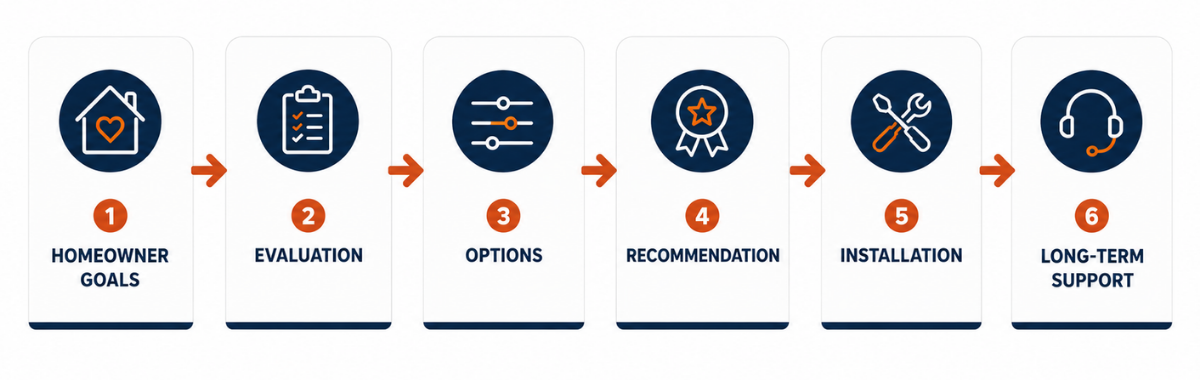
Start With Your Goals
Before comparing brands, efficiency ratings, warranties, or prices, start by asking yourself a simple question:
What problem am I trying to solve?
For one homeowner, the goal may be replacing an aging system before it fails.
For another, it may be reducing humidity.
For another, it may be making an upstairs bedroom more comfortable.
For another, it may be improving indoor air quality for a family member with allergies.
The answer matters because different goals often lead to different recommendations.
A contractor who understands your priorities can tailor recommendations to your situation.
A contractor who never asks about your goals may be recommending equipment before fully understanding the problem.
One of the first things a professional HVAC company should do is ask questions.
Questions about comfort.
Questions about the home.
Questions about how long you plan to stay.
Questions about recurring problems you've experienced.
Questions about budget and priorities.
The conversation should begin with understanding, not selling.
A Recommendation Should Come With an Explanation
One of the simplest ways to evaluate an HVAC company is to ask:
Can they explain why they're recommending what they're recommending?
The explanation doesn't need to be complicated.
In fact, the best explanations are usually the easiest to understand.
You should understand:
- Why a particular system was recommended
- Why a certain efficiency level was suggested
- Why a specific system size was selected
- What tradeoffs exist between different options
A recommendation without an explanation leaves homeowners in a difficult position.
You're being asked to make a major investment without understanding the reasoning behind it.
A professional should be able to walk you through the recommendation clearly.
If something isn't clear, you should feel comfortable asking questions until it is.
You Should Never Feel Rushed Into a Decision
Heating and cooling systems often remain in a home for ten to twenty years.
It's reasonable to take that decision seriously.
It's reasonable to compare estimates.
It's reasonable to ask questions.
It's reasonable to sleep on it.
A professional consultation should create clarity, not pressure.
That doesn't mean every company will have the same timeline.
There are legitimate situations where pricing changes, manufacturer promotions expire, or inventory becomes limited.
But understanding those realities is different from feeling pressured to make an immediate decision.
You should feel free to gather information, compare options, and make the decision that feels right for your household.
The goal is confidence, not urgency.
A Good Contractor Should Give You Options
Many HVAC decisions involve tradeoffs.
For example:
- Higher efficiency versus lower upfront cost
- Single-stage versus variable-speed equipment
- Repair versus replacement
- Financing versus paying upfront
Reasonable homeowners may arrive at different conclusions.
That's why options matter.
A good consultation often includes multiple paths forward.
One homeowner may prioritize comfort.
Another may prioritize budget.
Another may prioritize long-term ownership costs.
The right recommendation depends on the homeowner's goals.
You don't necessarily need ten different proposals.
But understanding your options helps you make an informed decision rather than feeling like there was only one acceptable choice.
You Should Understand the Tradeoffs
Every HVAC recommendation involves tradeoffs.
Higher-efficiency equipment may reduce energy consumption but increase upfront cost.
A repair may cost less today but leave an aging system in place.
A variable-speed system may offer additional comfort features while a simpler system may better align with another homeowner's priorities.
A professional recommendation should help you evaluate the advantages, limitations, and considerations associated with each option.
You don't need to become an HVAC expert. You simply need enough information to understand why one option may be a better fit for your home than another.
When homeowners feel stuck, it's often not because they have too little information. It's because they haven't been given context for comparing their options.
Understanding the tradeoffs creates clarity.
How to Compare HVAC Estimates
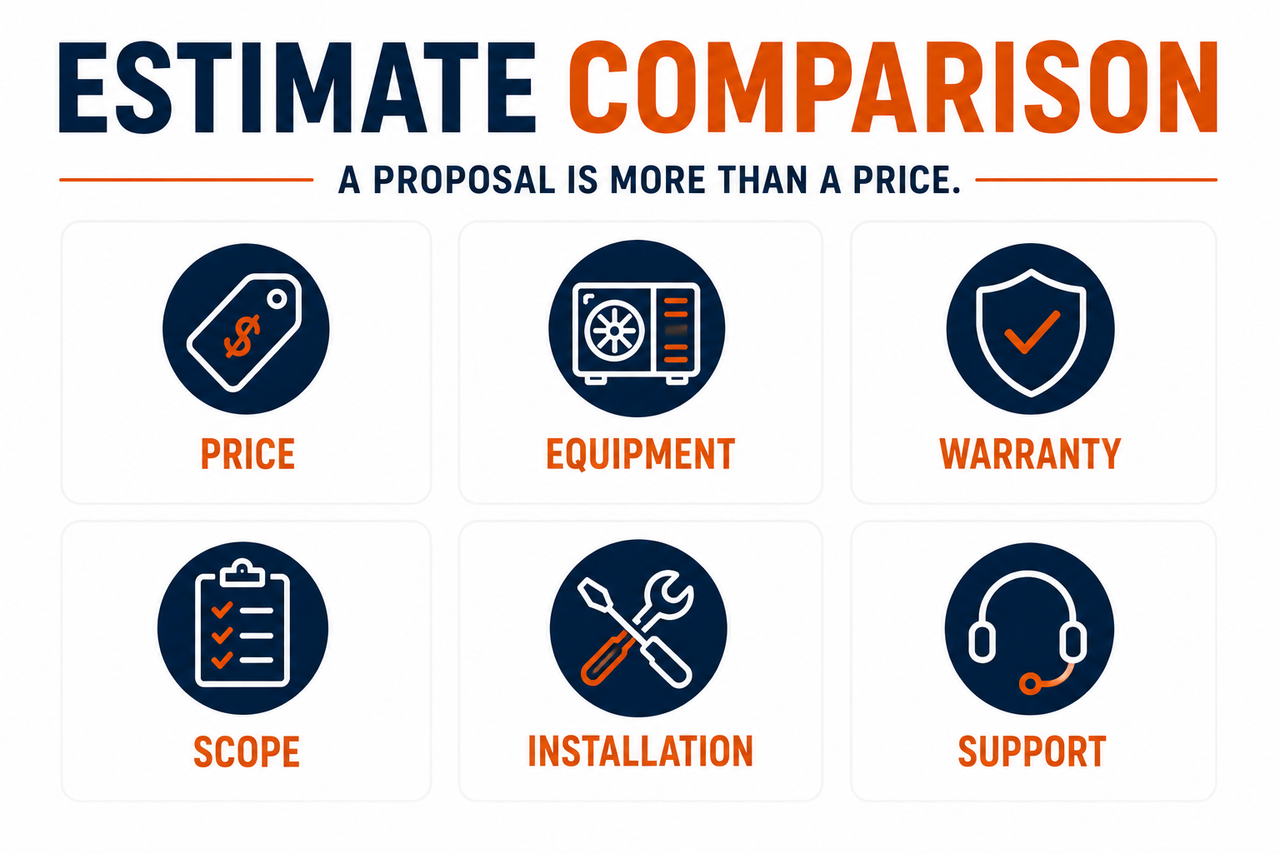
One of the biggest mistakes homeowners make is comparing HVAC estimates based solely on price.
It's understandable.
Price is easy to compare.
Scope of work is not.
Two estimates may look similar at first glance while including very different levels of service.
When reviewing proposals, consider:
Equipment Type
What type of system is being proposed?
Single-stage? Two-stage? Variable-speed? Heat pump? Traditional air conditioner and furnace?
The equipment category matters just as much as the brand name.
Scope of Work
What exactly is included?
Will electrical upgrades be required?
Are permits included?
Will refrigerant lines be replaced?
Will duct modifications be performed?
The details matter.
Warranty Coverage
What warranty is being offered?
Who provides it?
What responsibilities remain with the homeowner?
Installation Process
How will the installation be performed?
How long will it take?
Who will perform the work?
What quality-control steps are included?
A proposal is more than a price. It's a description of the experience you're purchasing.
Why Sizing Matters
One of the most important decisions made during an HVAC replacement is system sizing.
Many homeowners assume larger equipment will cool the home better.
Unfortunately, HVAC systems don't work that way.
A system that is too large can create comfort problems.
A system that is too small can struggle to maintain desired temperatures.
Proper sizing requires evaluating the home's characteristics and cooling requirements.
That's why professional sizing calculations matter.
A contractor should be able to explain how they arrived at the recommended system size rather than simply matching the size of the existing equipment.
Because sometimes the original equipment wasn't sized correctly either.
What Happens After the Installation?
Most homeowners spend a lot of time evaluating the estimate and very little time thinking about what happens afterward.
That's understandable. The installation is the immediate concern.
But a new HVAC system isn't just a purchase. It's the beginning of a service relationship.
Questions may come up after the installation.
Warranty issues may need to be addressed.
Maintenance may be required.
At some point, you may need support.
Part of choosing an HVAC company is understanding what that experience looks like.
Who do you call if something doesn't seem right?
How are warranty concerns handled?
What happens if you have a question six months later?
A professional company should be able to explain what support looks like after the installation is complete.
The goal isn't simply installing a system. It's supporting that system throughout its life in your home.
Reviews Are Helpful, but They're One Piece of the Puzzle
Most homeowners read reviews before hiring an HVAC company.
That's a reasonable place to start.
Reviews can provide insight into:
- Communication
- Professionalism
- Responsiveness
- Punctuality
- Customer experience
But reviews have limitations too.
A five-star review doesn't necessarily tell you whether a system was properly sized.
A one-star review doesn't always tell the whole story.
Instead of focusing on individual reviews, look for patterns.
Do customers consistently mention good communication?
Do they mention professionalism?
Do they mention follow-through after the installation?
Do they mention that the company explained options and answered questions?
Pay attention not only to what people say, but how the company responds when problems arise.
No company is perfect.
What often matters most is how issues are handled when they occur.
Licensing, Insurance, and Credentials Still Matter
While much of this article focuses on process and communication, there are also practical items that deserve verification.
At a minimum, homeowners should confirm that the company is properly licensed and insured.
Licensing requirements exist for a reason.
They help establish professional standards and accountability.
Insurance protects both the homeowner and the contractor if something unexpected happens during the project.
This isn't the most exciting part of choosing an HVAC company, but it's one of the easiest things to verify.
Professional companies should be comfortable discussing licensing, insurance, and certifications.
Financing Should Be Transparent
For many homeowners, HVAC financing is a valuable tool.
A replacement system is a significant investment, and financing can make that investment more manageable.
The issue isn't whether financing is offered.
The issue is whether financing is explained clearly.
You should understand:
- The monthly payment
- The interest rate
- Promotional terms
- When promotional periods expire
- The total cost over time
- Alternative payment options
If financing is part of the discussion, transparency matters.
You shouldn't feel rushed through paperwork.
You shouldn't feel uncomfortable asking questions.
And you should leave the conversation understanding exactly what you're agreeing to.
A financing option should make a decision easier to understand, not harder.
Permits and Code Compliance Matter
Permits are rarely the most exciting part of an HVAC replacement.
But they're an important part of professional installation.
Permits help ensure work is performed according to applicable codes and standards.
Requirements vary depending on the municipality and scope of work, but homeowners should understand whether permits are required and who is responsible for obtaining them.
A professional company should be able to explain:
- Whether permits are needed
- What inspections may occur
- How compliance will be handled
This should not feel mysterious.
It should simply be part of the process.
Communication Often Predicts the Experience
One of the strongest indicators of how a project will go is how communication feels before the project even begins.
Do your questions receive thoughtful answers?
Are calls returned?
Are expectations explained clearly?
Do you feel heard?
Many homeowners focus heavily on equipment selection.
Equipment matters.
But communication often has a larger impact on the overall experience than people expect.
The installation itself may take one or two days.
The relationship often lasts much longer.
A company that communicates well during the estimate process is often more likely to communicate well after the installation too.
Questions Worth Asking Before You Sign
You don't need to become an HVAC expert before making a decision.
You do deserve enough information to feel comfortable moving forward.
Some questions worth asking include:
- Why are you recommending this system?
- How was the system size determined?
- What alternatives did you consider?
- What warranties are included?
- What work is included in the proposal?
- Are permits required?
- What financing options are available?
- Who will perform the installation?
- What happens if there is a problem after the installation?
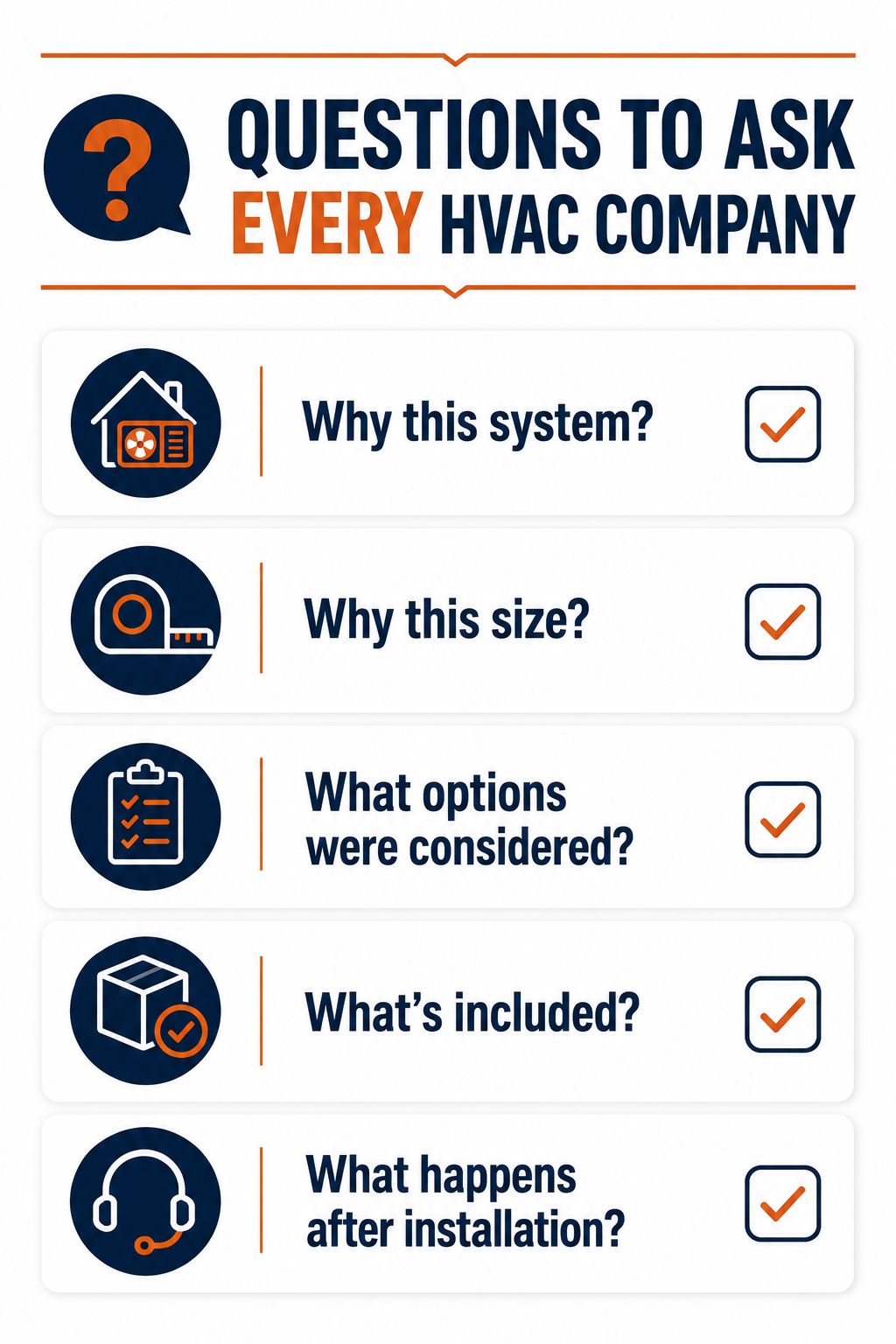
Notice that none of these questions are designed to "catch" anyone.
They're designed to help you understand the recommendation and the process behind it.
A professional should welcome those conversations.
What a Professional HVAC Process Should Feel Like
By the time you're ready to make a decision, you should understand what's being recommended and why.
You should know what options were considered.
You should know what work is included.
You should know what to expect during the installation.
You should know who to call if questions come up later.
Most importantly, you should feel comfortable making the decision.
A heating and cooling system is a significant investment. Questions are reasonable. Taking time to think through your options is reasonable. Comparing estimates is reasonable.
A professional process creates clarity.
You may still have decisions to make. You may still be weighing different options. But you shouldn't feel confused about what is being proposed or why.
Professionalism isn't measured by how quickly a decision is made.
It's reflected in the quality of the conversation, the clarity of the recommendation, and the confidence a homeowner feels when moving forward.
How to Make the Decision
By this point, you may still have multiple estimates on the kitchen table.
That's normal.
In fact, if you're replacing an HVAC system, I generally think it's reasonable to speak with more than one company.
Speaking with more than one company is often helpful. At some point, though, additional estimates stop providing new information and start repeating the same conversations.
Instead, focus on a few key questions.
Did the company take the time to understand your goals?
Did they explain their recommendations in a way that made sense?
Did they answer questions directly?
Did they discuss alternatives and tradeoffs?
Do you understand what is included in the proposal?
Do you feel comfortable with the installation process they described?
Can you see yourself calling this company three years from now if you need help?
The answers to those questions often tell you more than the equipment brand, efficiency rating, or price alone.
An HVAC system is not simply a piece of equipment. It's a long-term relationship with the company responsible for installing and supporting it.
That's one reason the lowest price isn't always the lowest cost.
And the highest price isn't automatically the best value.
A recommendation should make sense for your home, your goals, and your circumstances.
The company behind that recommendation should help you understand why.
The Bottom Line
Choosing an HVAC company can feel overwhelming because there are so many variables involved.
By the time many homeowners reach a decision, they've heard different opinions, received different recommendations, and reviewed more information than they expected. That's normal.
The good news is that you don't need to become an HVAC expert to make a good decision.
You simply need enough information to understand the recommendation, evaluate the process behind it, and feel confident moving forward.
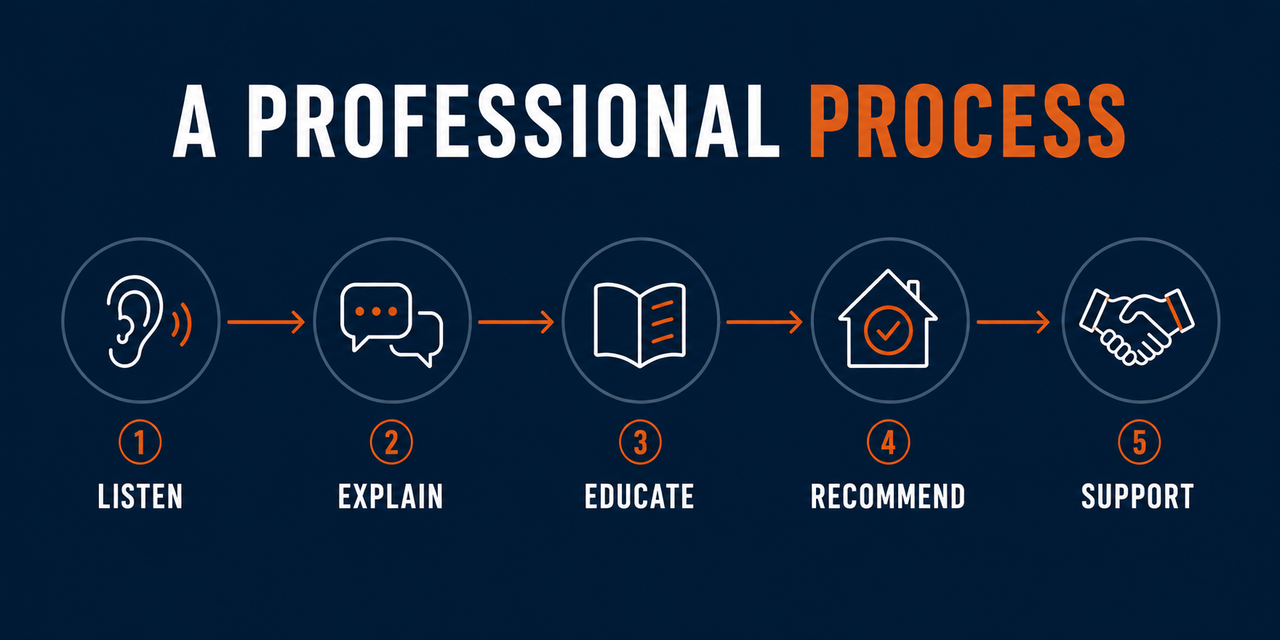
A professional HVAC company should listen before recommending.
Explain before persuading.
Educate before asking for a commitment.
When those things are present, the decision becomes much easier.
Not because every uncertainty disappears.
Because you have the information you need to make an informed choice.
If you're evaluating HVAC replacement options in Cypress, Katy, Bridgeland, Towne Lake, or the surrounding Houston area, we'd be happy to answer your questions, discuss your goals, and help you understand your options.
Whether you ultimately choose us or another company, our hope is that you feel confident in the decision you make and comfortable with the process that got you there.
Schedule a Complimentary System Estimate
Have questions about replacing your HVAC system?
Let's start with a conversation.
We'll discuss your goals, evaluate your current system, answer your questions, and help you understand the options available for your home. Schedule online or call (832) 558-8539.
Veteran-Owned. Family-Run. Dr. Mom Approved.
Frequently Asked Questions
How many HVAC estimates should I get?
Many homeowners find value in speaking with more than one company. The goal is not to collect the highest number of estimates but to understand your options and compare recommendations.
How do I compare HVAC estimates?
Compare more than price. Review equipment type, scope of work, warranty coverage, installation process, permits, and long-term support.
Should an HVAC company perform a load calculation?
A professional HVAC contractor should be able to explain how system sizing was determined. Proper sizing is an important part of system performance, comfort, and efficiency.
Is the lowest HVAC estimate always the best choice?
Not necessarily. HVAC proposals can differ significantly in equipment, installation scope, warranty coverage, and long-term support.
What questions should I ask an HVAC contractor?
Ask why a system is being recommended, how sizing was determined, what alternatives were considered, what work is included, and what support is available after installation.
Should an HVAC company offer financing?
Many reputable HVAC companies offer financing. The important factor is transparency regarding rates, terms, monthly payments, and total cost.
What should happen during an HVAC estimate?
A professional estimate should include questions about your home, comfort concerns, goals, system evaluation, discussion of options, and clear explanations of recommendations.