
Jump to section
Rebate update, October 2026: Rebate amounts and dates change. Check our rebates page for the most up-to-date information.
Your AC goes out in the middle of a Houston summer. Your house is getting hotter, your family is uncomfortable, and now you're being asked to make a five-figure decision with very little context.
You call around for quotes and get numbers that are thousands of dollars apart. And nobody will just give you a straight answer.
How much does it cost to replace an HVAC system in Cypress or Katy?
Why do HVAC quotes vary so much between companies?
That's what this guide is for.
On average, a full HVAC system replacement in the Cypress and Katy area costs between $11,000 and $45,000.
Most homeowners land somewhere between $14,000 and $22,000, depending on their home, system type, and what the installation actually requires.
The average HVAC replacement cost in Cypress and Katy ranges from $9,000 to $45,000, with most homeowners paying between $14,000 and $22,000 depending on the system and installation requirements.
But the number is only part of the answer. Your HVAC system is the single largest energy user in your home, more than any other system you own. It directly affects how comfortable your family is, what you pay in utilities every month, and how well your home holds up to Houston heat and humidity. That context is what makes this decision worth understanding clearly.
Here's what we're going to cover:
- What different HVAC systems actually cost
- Why some quotes are so much cheaper than others
- What factors drive your specific price up or down
- What homeowners are doing in 2026 to handle the cost
What Do Different HVAC Systems Cost?
The biggest driver of your final price is the tier of equipment you choose. Not every home needs the same system, and not every homeowner is looking for the same outcome. Some prioritize keeping upfront costs lower; others are thinking about long-term efficiency and comfort.
The biggest driver of cost is the type of system you choose.
Here’s how the tiers typically break down:
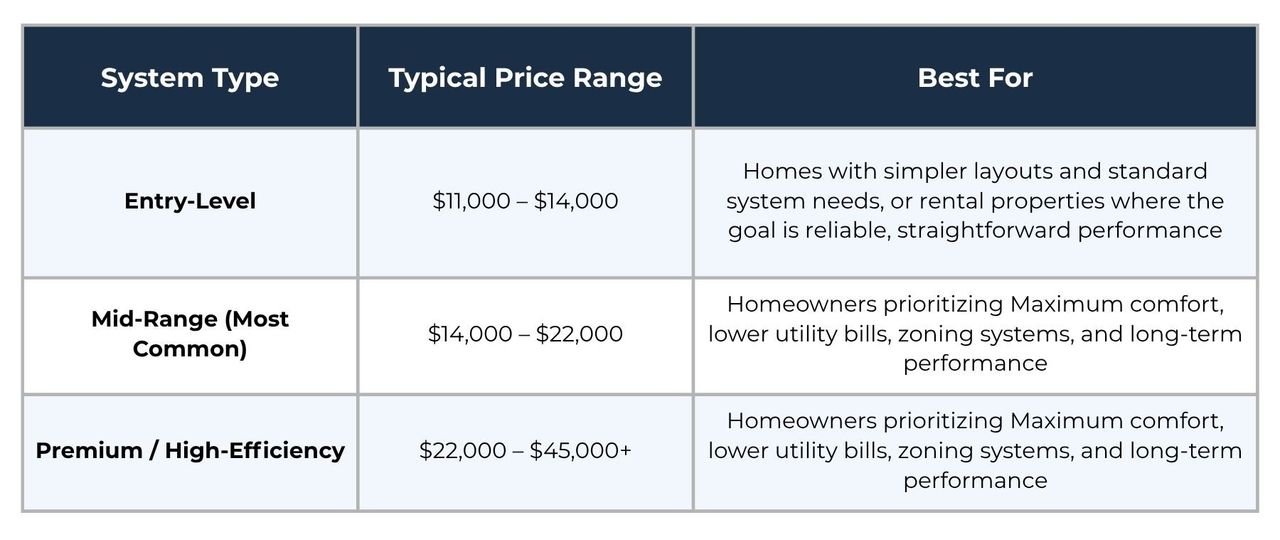
These ranges include both equipment and professional installation. Where you fall within them depends on your home's specific conditions, which we'll cover in the next section.
One note worth making: we often see rental property owners or Airbnb hosts choose systems in the entry-level range; not because they're cutting corners, but because dependable, straightforward performance fits the property's purpose. That's a legitimate decision.
Understanding the tiers helps you match the system to your actual goals.
Why Are Some HVAC Quotes So Much Cheaper Than Others?
This is one of the most common questions homeowners have when comparing estimates. When you see a quote that's thousands of dollars lower than others, the natural reaction is: "Am I about to overpay?"
But in most cases, the better question is: "What's missing from the cheaper quote?"
If a quote is significantly cheaper, something is almost always missing.
Here's what it usually comes down to:
Lower-Quality Equipment
Entry-level units cost the contractor less but over time, the difference tends to show up in shorter lifespan, lower efficiency, higher utility bills, and more frequent repairs. The upfront number is lower; the long-term cost is often higher.
Installation Quality
This is something most homeowners don't fully appreciate until they've lived with a bad installation.
Installation quality matters just as much as the equipment itself.
A poorly installed system can struggle to cool your home, leave you with humidity issues (which is a real problem in Houston), and wear out significantly faster.
This isn't something you can see by looking at a quote.
Missing Scope of Work
A lower quote often simply doesn't include everything your home actually needs.
That might mean no ductwork adjustments, no electrical upgrades, no proper load calculation.
Those things don't disappear, they just show up later as comfort problems, unexpected costs, or that last 3-5 years and not the 10-15 that it's designed for.
Permits Skipped, When They're Required
Some contractors skip permits even when they're legally required.
If that happens, the responsibility doesn't stay with the contractor, it falls on you as the homeowner.
Warranty Coverage
A lower quote often comes with a shorter or vaguer labor warranty, or none at all. The warranty is how much a contractor is willing to stand behind their work.
A company confident in their installation will give you clear terms on both the manufacturer's equipment warranty and their own labor warranty.
Materials Quality
Not all components used in an installation are equal.
Contractors can reduce cost by using lower-grade materials.
Copper fittings, disconnect boxes, drain lines, hangers aren't visible in a quote but affect how the system holds up over time. The equipment brand on the quote doesn't tell you what's holding it together.
Insurance Costs
Properly insured contractors, carrying both general liability and workers' compensation, pay more to operate.
That cost is reflected in their pricing. A significantly cheaper quote may mean the contractor is underinsured or uninsured entirely. If something goes wrong on your property and they don't carry workers' compensation, you can be held personally liable. It's worth asking for a Certificate of Insurance before anyone starts work.
WORTH KNOWING 💡
If you're trying to figure out which quote you can actually trust, see our companion guide: How to Choose the Right HVAC Company in Cypress & Katy.
Bottom line: If a quote is significantly cheaper, something is almost always missing, but you may not see it until after installation.
Do You Need a Permit for HVAC Replacement in Cypress or Katy?
It depends on your specific address. Some properties in this area require a mechanical permit for HVAC replacement. Others don't. It comes down to exactly where your property sits, not your mailing address or the name of your neighborhood.
This is something we verify for every job before we finalize a quote.
License reminder: Regardless of permit requirements, your contractor must hold a valid TDLR license everywhere in Texas. Always verify before hiring anyone.
What Factors Drive the Cost Up or Down?
The system itself is only part of the price. Every home is different, and the installation details are what separate a quote that makes sense from one that surprises you later. As I mentioned above:
Installation conditions often impact price just as much as the type of equipment you choose.
Here are the most common factors:
Line Set Condition
The copper tubing connecting your outdoor unit to your indoor coil. If it's the wrong size, corroded, or too short for the new installation location, it will need to be replaced.
A line set replacement can add several hundred to over $1,000.
Duct Work
If your existing ductwork is leaking, undersized, or poorly designed, a new system won't solve your comfort problems.
Sealing, resizing, or rerouting ducts can add anywhere from a few hundred to several thousand dollars, depending on scope.
This is one of the most common reasons a system underperforms after replacement, and one of the most commonly skipped items in a low quote.
Electrical
More efficient systems sometimes require updated wiring or a new circuit breaker.
If your panel needs attention, that work adds cost, typically a few hundred to over $1,000 depending on what's required.
One upgrade worth understanding: a dedicated circuit breaker for your HVAC system (or a whole-home surge protector) protects your equipment from voltage spikes and power surges.
In the Houston area, where summer storms are frequent and power fluctuations are common, this is a practical layer of protection for a system you just invested thousands of dollars in. It's not always included in a base quote, but it's worth asking about.
Access
Standard ground-level installations are the most straightforward. Rooftop units, tight attic access, or fenced-in areas increase labor time and therefore cost.
Proper Sizing
A system that's too large will short-cycle, it turns on and off too frequently, which leads to poor humidity control and uneven temperatures. This is a widespread problem in Houston-area homes. A system that's too small won't keep up on the hottest days. We perform a proper load calculation on every installation to make sure you're getting the right system, not just the biggest one.
Thermostat and Controls
Basic thermostats are included in standard installations. Upgrading to a smart thermostat or zoning system adds cost, but often pays for itself in comfort and energy efficiency over time.
Why Have HVAC Prices Increased in Recent Years?
If it feels like systems cost more than they used to, that's because they do. A few things have driven this:
New Federal Efficiency Standards (SEER2)
Federal regulations now require all new HVAC systems to meet higher efficiency minimums, known as SEER2 ratings. More efficient systems are better for homeowners long-term, but they're also more complex to engineer and manufacture, and those costs get passed along.
Material Costs
HVAC systems rely heavily on copper, steel, and refrigerant. The cost of all three has increased significantly over the past several years due to supply chain disruptions and global demand. All major manufacturers have raised equipment prices multiple times since 2020.
Skilled Labor
Installing an HVAC system correctly requires trained technicians, proper tools, and real experience with system sizing, airflow, and installation standards. Like many trades, the cost of that expertise has gone up, and it should. A properly trained technician who does the job right represents real value. That's what you're paying for.
The short version: what cost around $8,000 five years ago may cost closer to $12,000 today. That trend is unlikely to reverse.
What If You Can't Pay for It All at Once?
Most homeowners aren't writing a check for $15,000 out of pocket, and they don't have to.
There are multiple ways homeowners are handling HVAC replacement in 2026.
Here's how homeowners are handling it in order of what typically works out best.
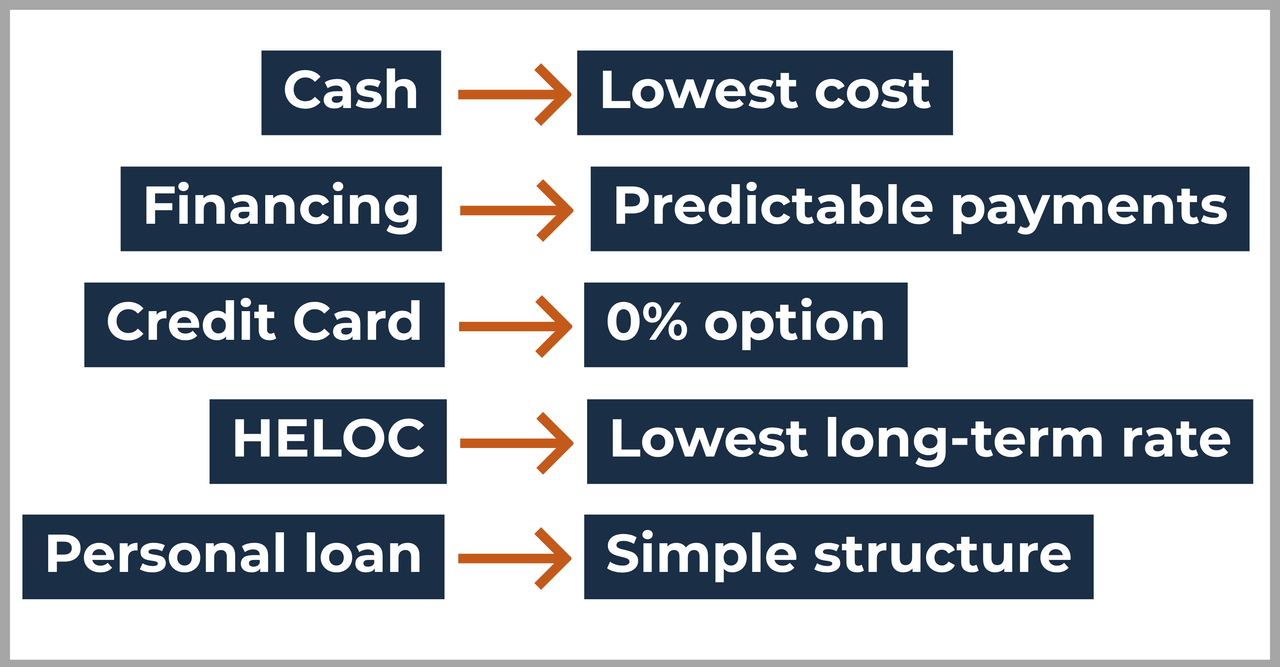
Paying by Cash, Check, or ACH
If you can pay directly, this is the best financial move. Most HVAC companies, including us, price their work at a base rate that assumes standard payment. Paying by credit card adds processing fees (typically 2.5–3%) that get passed along.
Paying by check or ACH means you pay the net investment price, the base cost with no added fees. It's not a discount. It's just what the system actually costs without the overhead of card processing.
Contractor Financing
Many HVAC companies offer financing through third-party lenders. Programs like 18-month same-as-cash, or fixed monthly payments over 5–10 years. This is a legitimate option, and for the right homeowner it makes the decision much more manageable.
One thing worth understanding: in most cases, the cost of offering financing is built into the equipment price.
You're not getting a $12,000 system financed for free. The cost of that financing program is factored into the price of the equipment. That doesn't make it a bad deal. It just means the advertised monthly payment and the total cost of the system are related in ways that aren't always transparent.
0% Intro APR Credit Card
This is one of the most underused tools available to qualified homeowners. Many major credit cards offer 12–18 months of 0% interest on new purchases. If you qualify, you can put the system on the card, pay it down like a car note over the promotional period, and pay zero interest, while earning rewards on the purchase at the same time.
Most 0% intro APR cards require good to excellent credit (generally 670 or above). We're not financial advisors and don't recommend specific cards, but searching "0% intro APR credit card" will show you current offers. It's a straightforward, widely-used approach that most homeowners don't think to apply here.
Home Equity Line of Credit (HELOC)
If you've been in your home for several years, you may have more equity available than you realize. Homeowners in Cypress and the surrounding master-planned communities have often accumulated significant equity they're not actively thinking about. A HELOC lets you borrow against that equity at lower rates than most personal loans or credit cards, with structured repayment terms.
This is often the smartest long-term move for a larger system investment, but it requires some lead time to set up. Worth exploring before you're in an emergency situation.
Personal Loan
If home equity isn't an option, a personal loan through your bank or a lender keeps things simple: fixed payments, a clear payoff timeline, no collateral required. Rates vary based on your credit profile, but it's a clean and straightforward path.
Rebates and Incentives
The federal Section 25C tax credit ended on December 31, 2025. It no longer applies to systems installed in 2026.
Here is what's real right now: Daikin is running a $750 instant rebate on qualifying R-32 Daikin FIT full-system replacements purchased by July 31, 2026. It comes off your invoice at purchase, and we file the paperwork.
Manufacturer and utility incentive programs change throughout the year. Ask what your specific project qualifies for at your estimate.
A note on our end: we offer financing. Pre-qualification is a soft credit pull that takes about a minute, with no impact on your credit score, and approval, plans, and rates are determined by the lender based on your credit profile. Start on our financing page.
What Does a New System Actually Cost You Per Day?
Here’s a way to put the number in perspective.
A $15,000 system, which is typical for many homes in this area, usually works out to around $150–$180 per month depending on financing terms.
Now here’s the part most companies skip: if you're replacing an older, less efficient system, your energy bill will likely go down.
In a typical Houston-area home, that savings can be around $25–$40 per month.
So the real math often looks like this:
~$160/month payment – ~$30/month in energy savings = about $130/month net
That works out to roughly:
👉🏾 $4–5 per day to keep your home comfortable year-round
Ready to Find Out Your Exact Cost?
While a full HVAC system replacement in the Cypress and Katy area typically ranges from $9,000 to $45,000, the only way to know your actual number is for us to see your home's specific setup.
We'll evaluate your current system, measure your home properly, verify your permit requirements, and give you a clear, itemized quote.
Complimentary System Estimate
We evaluate your home, explain what we find, and give you a clear, itemized quote. No obligation.
Scheduling is easy: call or book online.
📞 832-558-8539
Still researching? Download the HVAC Hiring Checklist, a straightforward guide to evaluating any contractor, so you get a fair, honest installation no matter who you hire.
See Your Own Price Range
Want a number for your home, not just a general range? Our HVAC replacement cost estimator turns a few questions into a price range for a new system, with no phone call or email required.
Frequently Asked Questions
How much does it cost to replace an HVAC system in the Houston area?
Most professionally installed systems in this area range from approximately $14,000 to $22,000, depending on equipment type, ductwork condition, electrical needs, and efficiency level. Complete system overhauls with high efficiency units can cost up to $45,000.
Why do HVAC quotes vary so much between companies?
HVAC pricing varies based on equipment quality, installation scope, and what's included. Lower quotes often exclude important components like ductwork, permits, or proper sizing.
Do I need a permit for HVAC replacement in Cypress or Katy?
Permit requirements depend on your specific location. Some homes require permits while others do not. A contractor should verify this before installation.
What causes unexpected cost increases during installation?
Common issues include damaged ductwork, electrical problems, or line set issues discovered after system removal. A proper evaluation reduces surprises.
How long should a new HVAC system last in Houston?
Most systems last 10–15 years in this climate with proper maintenance. Installation quality and upkeep play a major role.
Is it cheaper to just replace the outdoor unit?
It may cost less upfront, but replacing only one half of a matched system reduces efficiency, can shorten the lifespan of both components, and may void manufacturer warranties. In most cases, a full matched-system replacement is the better long-term investment.
Does a bigger system cool better?
No. Oversized systems short-cycle, they turn on and off too frequently, which leads to poor humidity control and uneven temperatures. This is a common problem in Houston-area homes. Proper sizing based on your home's actual load matters far more than going bigger.
When is the best time to replace?
Before you're in an emergency. Spring and fall are typically less hectic, but the right time is based on your system's condition, not the calendar. Emergency replacements limit your options and add stress to the decision. Planning ahead gives you time to compare, ask questions, and make the right call.
Does homeowners insurance cover HVAC replacement?
In most cases, no. Insurance typically covers replacement only if the damage was caused by a covered event, lightning strike, storm, fire. Normal wear and tear is not covered.
Is it better to pay cash, card, or use a financing option?
It depends on your situation. Monthly payments through contractor financing may be available. Using a 0% intro APR card lets you spread payments without interest during the promotional period, and earns rewards. A HELOC typically offers the best long-term rate for larger investments. There's no single right answer, just what makes sense for your budget and goals.