Jump to section
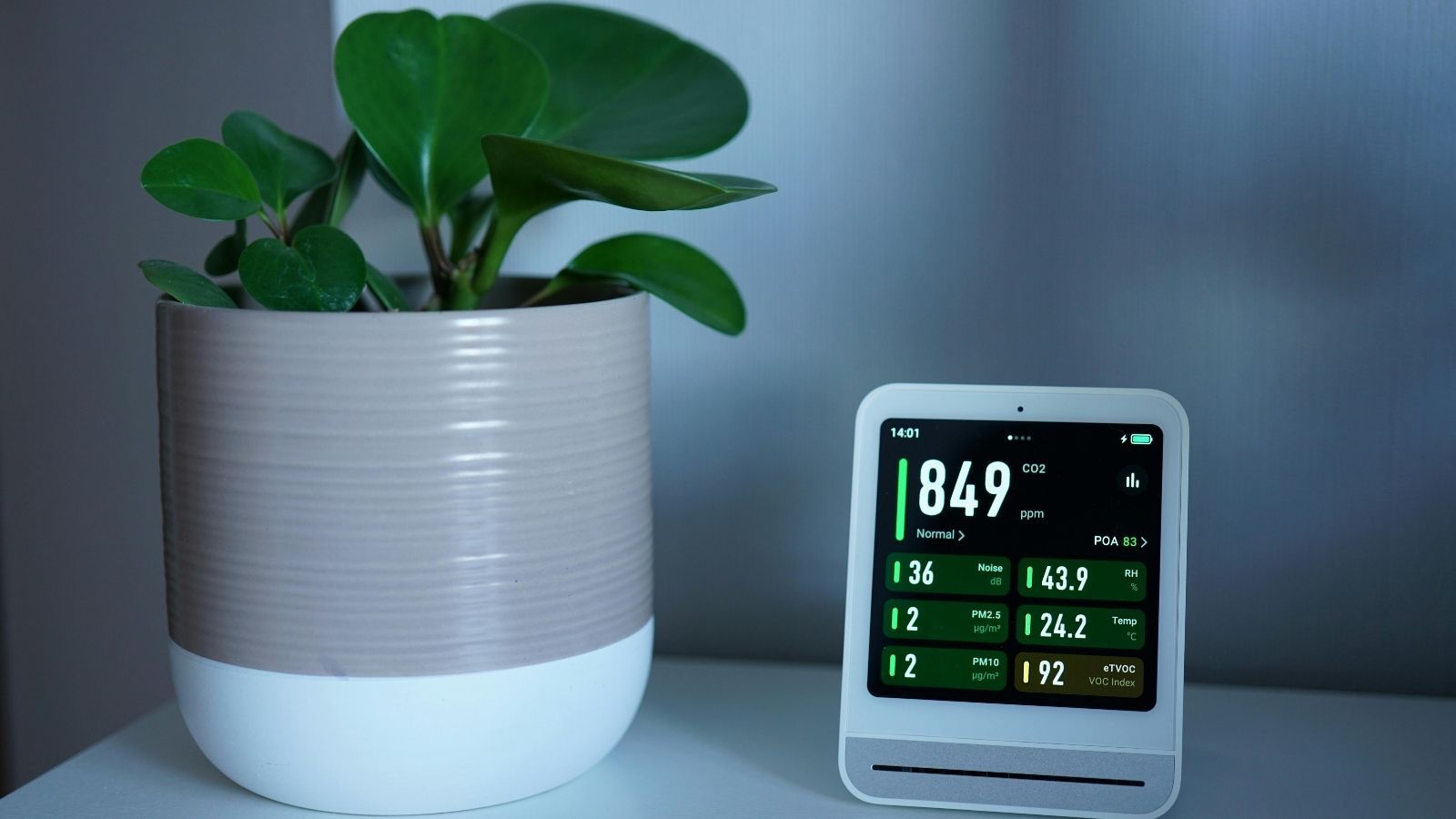
If you’ve ever walked into your home and felt congested, heavy, or just off and couldn’t explain why, you’re not imagining it.
You may assume it’s:
- Allergies
- The weather
- Or just “how Houston is"
Sometimes that’s true.
But sometimes, the air inside your home is actively working against you.
And the frustrating part?
We are never taught how indoor air actually works!
What You’ll Learn in This Guide
To help you identify what’s actually affecting your air quality, you’ll learn:
- What indoor air quality actually is
- The 5 factors that impact it most
- How to tell what’s causing issues in your home
- When a room purifier is enough, and when it’s not
- The truth about duct cleaning (and when it matters)
What Is Indoor Air Quality, and Why Does It Matter?
Indoor air quality is how clean, balanced, and breathable the air inside your home is.
It’s not just about dust.
It includes:
- Airborne particles (dust, pollen, pet dander)
- Humidity levels
- Airflow and circulation
- How well your HVAC system filters and moves air
And it directly affects how you feel in your home.
That means:
- How well you sleep
- How easily you breathe
- How comfortable your home feels
- How efficiently your system runs
Your home feels familiar so it’s easy to assume the air is fine. But familiar air doesn’t always mean healthy air.
What Actually Affects the Air Quality in Your Home?
1. Why Isn’t Your Air Filter Actually Cleaning Your Air?
Indoor air quality isn’t controlled by one thing.
It’s the result of five factors working together. When one is off, everything else becomes less effective.
The standard 1-inch flat filter that came with your builder-grade system was designed to do one thing: protect the equipment. It catches large debris, hair, lint, big dust particles, so they don’t get pulled into the blower. The blower is the fan inside your indoor unit that pulls air in from your home to be conditioned and sends it back out through your vents. It’s essentially what keeps air moving through the entire system.
The standard 1-inch flat filter was never designed to clean the air you breathe.
One important thing to understand about air filters:
- High-MERV filters in a 1-inch format can restrict airflow
- That restriction can strain your system if it isn’t designed for it
- And in some cases, still not deliver meaningful air quality improvement
A quick note on MERV: it stands for Minimum Efficiency Reporting Value, a scale that measures how small a particle a filter can capture. Higher MERV ratings mean finer filtration, but they also require more surface area to work effectively.
What actually works better: a 4-inch media filter.
It has dramatically more surface area than a standard 1-inch filter, which lets it capture much smaller particles, dust, pollen, pet dander, biological growth spores, while still allowing your system to breathe properly. Better filtration without the airflow penalty.
And 4-inch media filters don’t need to be changed as often. More surface area means more holding capacity before the filter becomes clogged. Depending on your home, they typically last 6 to 12 months.
Another common issue:
Filters installed out of sight (like in attics) often get forgotten.
- Months turn into years
- Filters become completely blocked
- Airflow drops significantly
We’ve seen this firsthand, a homeowner had a 4-inch media filter installed during a previous service visit, but because it was in the attic and out of sight, years passed without a change. By the time we saw it, the filter was completely blocked. The system was still running, but less air was getting through.
Your system may still run, but your air may not be improving.
2. Why Does Your House Feel Humid (Even With the AC Running)?
In Houston, this is often the real problem.
Humidity is one of the biggest drivers of indoor air quality, and one of the most overlooked.
What happens when humidity is too high:
- Particles stay airborne longer
- Biological growth risk increases
- Air feels heavier and harder to breathe
The EPA recommends:
- 30–50% indoor humidity
- No higher than 60%
Why this is tricky in Houston:
- Mild seasons = AC runs less
- Less runtime = less moisture removal
- Humidity builds up quietly
Your AC removes moisture from the air as a byproduct of cooling, but only when it’s running long enough to do so. During spring and late fall, when temperatures are mild and the system cycles on and off briefly, it never gets the chance to pull that moisture out. Outdoor air that’s warmer than the air inside your home pushes additional humidity in with every opening of a door or window, sometimes even through small gaps in the building envelope. The result is that indoor humidity climbs quietly, and you feel it before you can explain it.
Signs humidity is your issue:
- Air feels sticky or heavy
- You feel worse indoors than outside
- Issues are worse during spring/fall
If humidity isn’t controlled, other air quality solutions become less effective. We went deeper on this in our guide: Why Your House Feels Humid (Even With the AC Running).
3. Can Your HVAC System Itself Be Contaminating Your Air?
Your HVAC system can circulate contaminants if moisture isn’t controlled inside it.
Inside your air handler, the indoor unit that typically sits in your attic or a closet, is a component called the evaporator coil. In plain terms, it’s the part that gets cold so your air does too. As warm air passes over it, moisture from that air condenses on the coil’s surface, the same way a cold glass sweats on a humid day. That means the coil is consistently wet, it’s enclosed inside your equipment, and in Houston it runs for months at a time.
Inside your system is the evaporator coil:
- Cold surface
- Constant moisture
- Enclosed environment
That combination creates ideal conditions for biological growth.
What can develop:
- Biological growth
- Bacteria
- Biofilm
And when that happens? Every time your system runs, those particles circulate through your home. You’re not breathing dirty outdoor air. You’re breathing dirty indoor air that’s been contaminated by your own equipment.
The EPA identifies moisture as the primary condition that allows biological contaminants to multiply indoors.
What prevents this:
- Regular maintenance
- Moisture control
- In some cases, UV-C treatment
Signs something is off:
- A musty smell when the system first kicks on
- Recurring drain line clogs
- Air that feels stale despite regular filter changes
If internal components are compromised, your air quality suffers, even if cooling “works.”
4. Why Clean Air Doesn’t Matter If It Isn’t Moving
Even if everything else is correct… air quality fails if airflow is poor.
Think of your HVAC system like your home’s circulatory system. A good filter and a clean coil are only effective if air is actually moving through them and reaching every room. When airflow is compromised, the system can’t do its job. Filtered, conditioned air doesn’t reach the rooms that need it, and particles that should be captured just settle instead.
Common airflow issues:
- Blower motor performance declining
- Poor original system design
What this causes:
- Uneven air distribution
- Rooms that feel worse than others
Air quality isn’t just what’s in the air, it’s whether that air reaches your entire home.
5. Can Your Ducts Be Affecting the Air You Breathe?
Your duct system is the delivery network for everything your HVAC system does. It carries conditioned, filtered air from your equipment to every room in your home and what happens inside those ducts matters.
Over time, ducts can accumulate dust, debris, and in some cases biological buildup, particularly when moisture has been present.
Flex duct, the soft, accordion-style tubing used in most Houston attics, can also develop leaks, disconnections, or collapses that pull unfiltered attic air directly into your living space.
When that happens, whatever is in your attic, insulation particles, dust, outdoor allergens, bypasses your filter entirely and enters your home through your vents.
What this looks like in practice:
- Excessive dust that returns quickly after cleaning
- Allergy symptoms that don’t improve despite other changes
- Rooms that feel worse than others with no clear explanation
- A musty or stale odor from specific vents
Duct condition isn’t something that needs to be addressed in every home. In many cases, the more impactful improvements are filtration, humidity control, and system maintenance. But if those have been addressed and problems persist, the duct system is worth evaluating.
Air quality begins at the equipment, but it ends at your vents. Everything in between is part of the story.
Should You Use an Air Purifier or Fix Your Whole System?
This is one of the most common questions.
When a room air purifier makes sense:
- One room feels worse than others
- You want better air where you sleep
- You’re targeting a specific issue
A purifier solves a room-level problem. It targets a specific space and can make a real, noticeable difference without changing your HVAC system at all. For a bedroom, a pet area, or one room where symptoms are consistently worse, it’s often exactly the right tool.
When it’s not enough:
- You’re using multiple purifiers
- The whole home feels off
- Symptoms aren’t isolated
That usually means the issue is system-wide. At that point, adding more standalone devices is treating symptoms without addressing the source. The focus needs to shift to how air is being handled throughout the entire home at the system level.
At that point, the focus should shift to:
- Filtration
- Humidity control
- HVAC system condition and performance
Multiple purifiers are often a signal, not a solution.
Is Duct Cleaning Worth It, or a Waste of Money?
Duct cleaning gets a lot of attention, but the answer depends on your specific situation, and importantly, how the work is done.
What the EPA says:
- Routine duct cleaning is not always necessary
- It does not consistently improve air quality
The bigger issue is that not all duct cleaning is performed the same way. Most Houston homes use flexible ductwork, the soft, accordion-style tubing that runs through your attic. Unlike rigid metal ductwork, flex duct can be physically damaged if the cleaning approach is too aggressive or the equipment isn’t suited for the job.
The standard for effective duct cleaning is a truck-mounted vacuum system. The kind that creates real negative pressure throughout the entire duct system and actually moves debris out rather than disturbing it and leaving it to resettle.
Before scheduling duct cleaning, it’s worth asking what equipment the company uses.
When duct cleaning may make sense:
- Visible contamination confirmed by an evaluation
- Post-construction debris from a renovation or new build
- Confirmed buildup after a moisture or biological growth issue has been resolved
What improves air quality more in most homes:
- Filtration upgrades
- Humidity control
- System maintenance
Duct cleaning can be the right answer, but it works best when it follows an honest evaluation of what’s actually there.
What Should You Actually Do Next?
The next step is understanding what’s actually affecting your air.
Because the reality is that all five factors interact with each other:
- Filtration
- Humidity
- System condition and coil health
- Airflow
- Duct condition
A humidity issue can make filtration less effective. A clogged filter can reduce airflow. Poor airflow can allow buildup inside the system to circulate more widely. Duct leaks can pull unfiltered air into your home regardless of how good your filter is.
These factors don’t exist in isolation and that’s what makes air quality issues harder to pinpoint.
And because of that, the right solution depends on what’s specifically happening in your home.
Your Next Step
Before buying equipment or scheduling major work, you need to understand your baseline.
That means:
- Measuring humidity
- Evaluating filtration
- Checking system performance
- Identifying airflow issues
- Assessing duct condition if the other factors don’t explain what you’re experiencing
The right solution for one home can be completely wrong for another.
If You Want a Clear Answer
That’s exactly what an in-home indoor air quality assessment is designed to do. We measure humidity, evaluate your filtration, check system performance, and walk you through what we find.
If you’re in Cypress, Katy or surrounding neighborhoods, schedule an indoor air quality assessment.
And if humidity is what you’re most concerned about, start here: Why Your House Feels Humid (Even With the AC Running).
Final Thought
If your home has been feeling uncomfortable, heavy, or harder to breathe in, there’s a reason.
Now you understand the five factors affecting your air:
- Filtration
- Humidity
- System condition
- Airflow
- Duct condition
You know how they interact with each other, and why air quality issues aren’t always tied to just one thing.
Because when you understand what’s happening in your home, you can make decisions with confidence.
Frequently Asked Questions
What is the most important factor in indoor air quality?
Filtration and humidity control are the two most important starting points. If those aren't addressed, other solutions won't perform effectively.
Do air purifiers actually work?
Yes, for single rooms. If you need multiple purifiers, the issue is likely system-wide.
Is duct cleaning necessary?
Not in every home. Air quality is usually improved more through filtration, humidity control, and maintenance. When duct cleaning is appropriate, the equipment being used matters, truck-mounted is the standard worth asking about.
What is the best way to improve air quality in your home?
Start with filtration, then humidity, then system condition. Evaluate airflow and duct condition if those don't resolve the problem. Build from there based on what your home actually needs.
How do I know if my ducts are affecting my air quality?
Signs include excessive dust that returns quickly, allergy symptoms that don't improve despite other changes, rooms that feel worse than others, or odors from specific vents. A system evaluation can help you determine whether the ducts are the source.