Jump to section
Executive Summary
No. Replacing your HVAC system does not automatically mean you need to replace your ductwork.
Sometimes your existing ducts are in excellent shape and can continue serving your home for years. Other times, they're the very reason your home has never been comfortable in the first place.
It’s not just about the age of the ducts—it's about their condition, their design, and whether they can deliver the airflow your new system needs.
In this article, I'll explain:
- When you probably don't need new ducts
- When duct replacement really is the right decision
- How old ductwork can hold back a brand-new HVAC system
- How professionals determine whether your ducts should be repaired or replaced
You already know you need a new air conditioner. That's a big enough decision on its own.
Then someone tells you your ductwork might need to be replaced too.
Now your guard goes up.
You start wondering whether it's a legitimate recommendation or simply a way to make an already expensive project even more expensive.
I completely understand that reaction.
Before I entered the HVAC industry, I pictured an HVAC system as two pieces of equipment: the unit outside and the unit in the attic. The ductwork barely registered in my mind.
Learning how much those hidden ducts affect your comfort genuinely surprised me.
Your ductwork isn't an accessory to your HVAC system, it's one of the most important parts of it.
By the end of this guide, you'll understand when duct replacement is actually necessary, when it isn't, and how to tell which situation applies to your home.
What You'll Learn
- Why your ductwork is part of your HVAC system
- Why ducts matter as much as the equipment itself
- When you probably don't need new ducts
- When replacing ductwork makes sense
- Can bad ducts hurt a brand-new HVAC system?
- Why the return side of your ductwork matters
- When ductwork can be repaired instead
- How professionals determine whether ducts should be replaced
- Frequently asked questions
Your Ductwork Is Part of Your HVAC System
When homeowners think about replacing an HVAC system, they usually picture this:
Outdoor unit + indoor unit = HVAC system
But that's only part of the picture.
A complete HVAC system looks more like this:
Equipment + ductwork + airflow + controls = HVAC system
The equipment creates the conditioned air.
The ductwork is what delivers that comfort to the rooms where your family actually lives.
If the equipment can't move enough air through the home, it can never perform the way it was designed to.
The Air Conditioning Contractors of America (ACCA) describes HVAC design as a three-step process:
- Calculate how much heating and cooling each room needs.
- Select equipment that matches those needs.
- Design ductwork that delivers the proper amount of airflow to every room.
Notice that ductwork isn't an afterthought.
It's one of the engineering steps that determines whether the system succeeds or struggles.
That's why installing a brand-new HVAC system onto ductwork that was poorly designed—or never designed for that equipment at all—can limit the performance of the entire system.
Why Your Ducts Matter Just as Much as the Equipment
I often explain this using an analogy that's familiar to me as a physician.
Your HVAC equipment is like the heart.
Your ductwork is like the arteries.
A healthy heart can't do its job if the arteries are narrowed or blocked.
The same principle applies to your HVAC system.
Your equipment can only perform as well as your ductwork allows it to.
When ductwork is properly sized, well-sealed, and in good condition, your system can:
- Keep temperatures consistent instead of leaving some rooms hot while others stay cold.
- Remove humidity effectively, helping your home feel cool instead of cool and sticky.
- Operate efficiently, instead of sending conditioned air into the attic through leaks and disconnected joints.
That last point is bigger than many homeowners realize.
According to ENERGY STAR, the average home loses 20% to 30% of the air moving through its duct system because of leaks, disconnected joints, and poor connections.
That's cooled air you've already paid to produce.
Instead of reaching your bedrooms, it's cooling your attic.
Good ductwork isn't an upgrade. It's how the comfort you're paying for actually reaches your family.
If you're still deciding whether replacing your HVAC system is the right move, our article AC Repair vs. Replace: How to Actually Decide walks through that decision in more detail.
What Are Your Ducts Made Of?
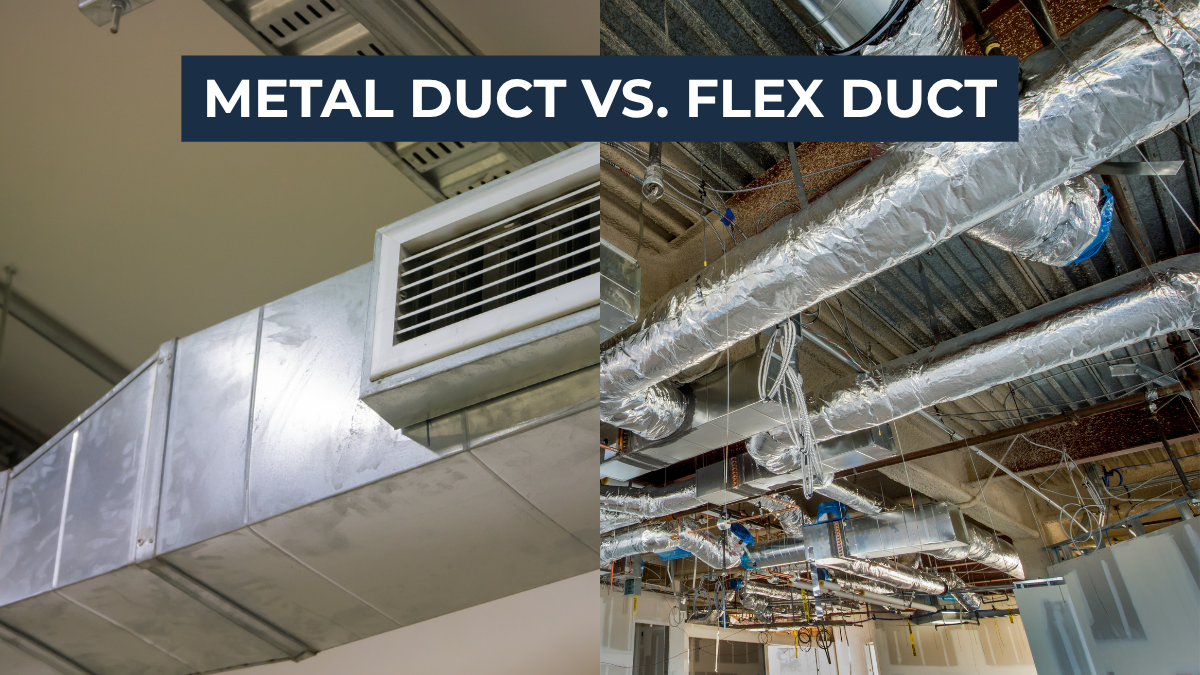
One of our own customers wasn’t sure what type of ducts she had. From the outside, their ducts looked like flexible ductwork.
Once we looked beneath the insulation, they turned out to be rigid sheet metal.
Both metal ductwork and flexible ductwork are wrapped in similar silver insulation jackets, so from across the attic they can look nearly identical.
The outside wrapping doesn't tell you what's underneath.
Most homes contain one of three common duct materials.
Sheet Metal
- Rigid construction
- Holds its shape well
- Often found in older homes
- Can last for decades when properly maintained
Flexible Duct
- Soft, insulated tube supported by a wire coil
- Most common in newer construction
- Easier to install
- More vulnerable to crushing, sagging, and physical damage
Fiberglass Duct Board
- Rigid fiberglass panels
- Often used for larger trunk lines
- Can perform well when kept dry
- More susceptible to problems if moisture gets into the material
The material matters far less than its condition.
There are older metal duct systems that are absolutely worth preserving.
And some much newer flexible duct systems are damaged enough to justify replacement.
The only reliable way to know what you have is to inspect the ductwork where it connects to the equipment or to the supply registers.
How Long Does Ductwork Usually Last?
This depends on the material and condition.
As a general guideline:
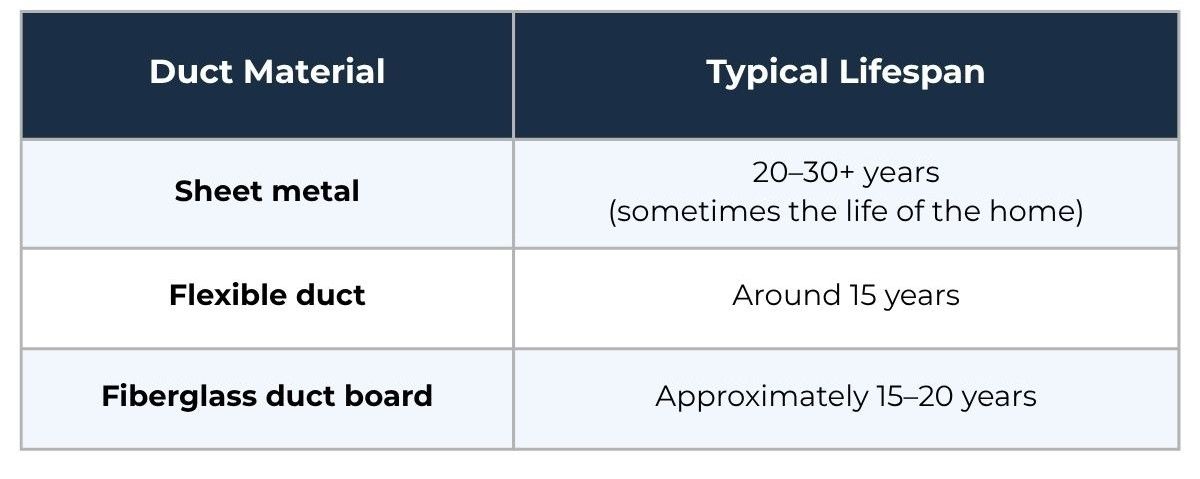
Heat, moisture, attic conditions, and installation quality usually determine how long ductwork lasts far more than the calendar does.
Why Duct Insulation Matters in a Houston Attic
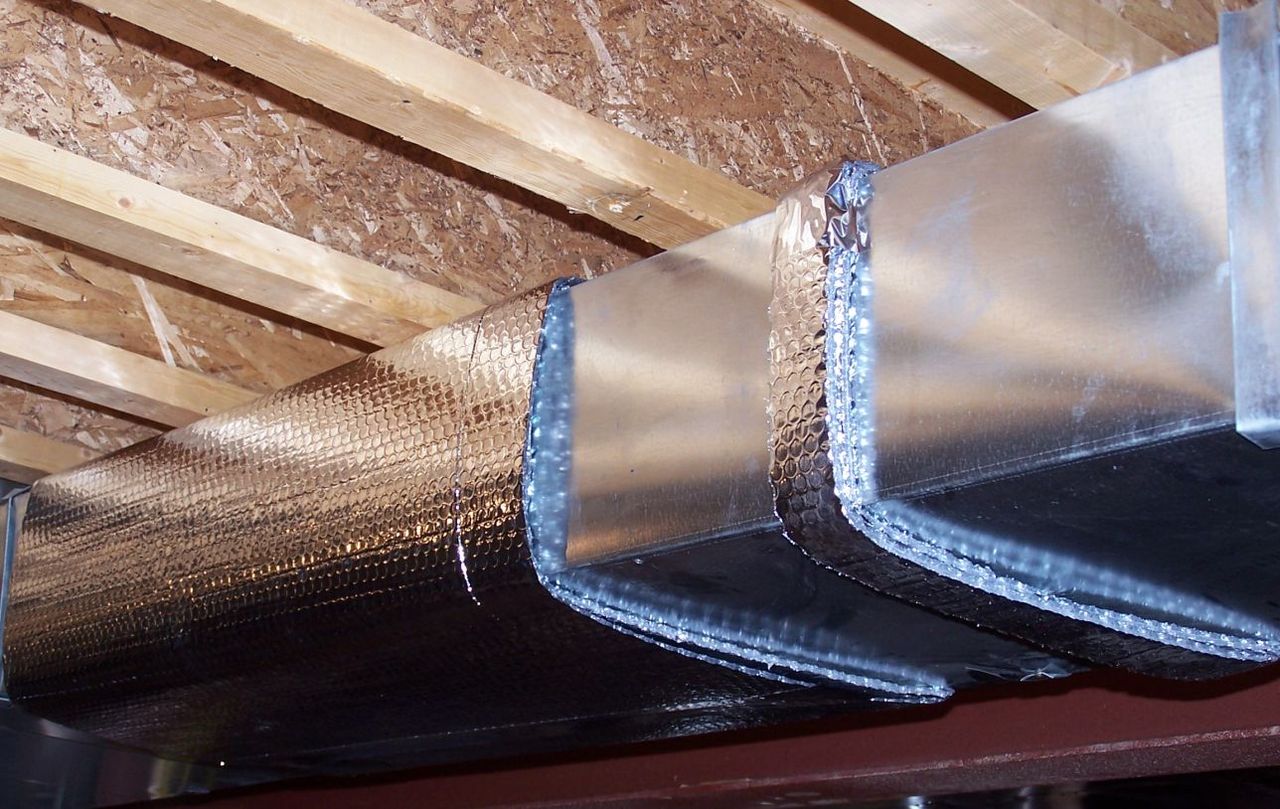
Houston attics get brutally hot.
On a summer afternoon, it's common for a vented attic to reach well over 130°F.
Meanwhile, your HVAC system is trying to send air that's roughly 55°F through that same space.
That's a temperature difference of more than 70 degrees.
Without proper insulation, your ductwork starts losing cooling before the air ever reaches your rooms.
When duct insulation has deteriorated or isn't thick enough, two things happen.
Your Air Warms Up
The cool air traveling through the ducts absorbs heat from the attic before it reaches your living space.
That means:
- Longer run times
- Higher utility bills
- More wear on the equipment
Condensation Develops
Cold ducts moving through a hot, humid attic behave just like a glass of iced tea on a summer day.
They sweat.
Over time, that moisture can soak into the insulation.
Wet insulation doesn't insulate well, and persistent moisture creates conditions where biological growth can develop.
Current building standards call for R-8 insulation around attic ductwork in our climate.
Many older homes have duct insulation that was installed to older standards, or has simply broken down over time.
Well-insulated ductwork protects both your comfort and your indoor air quality.
If clean indoor air is important to your family, this is one piece of the puzzle. We discuss that more in Why Indoor Air Quality Matters in Cypress.
When You Probably Don't Need New Ducts
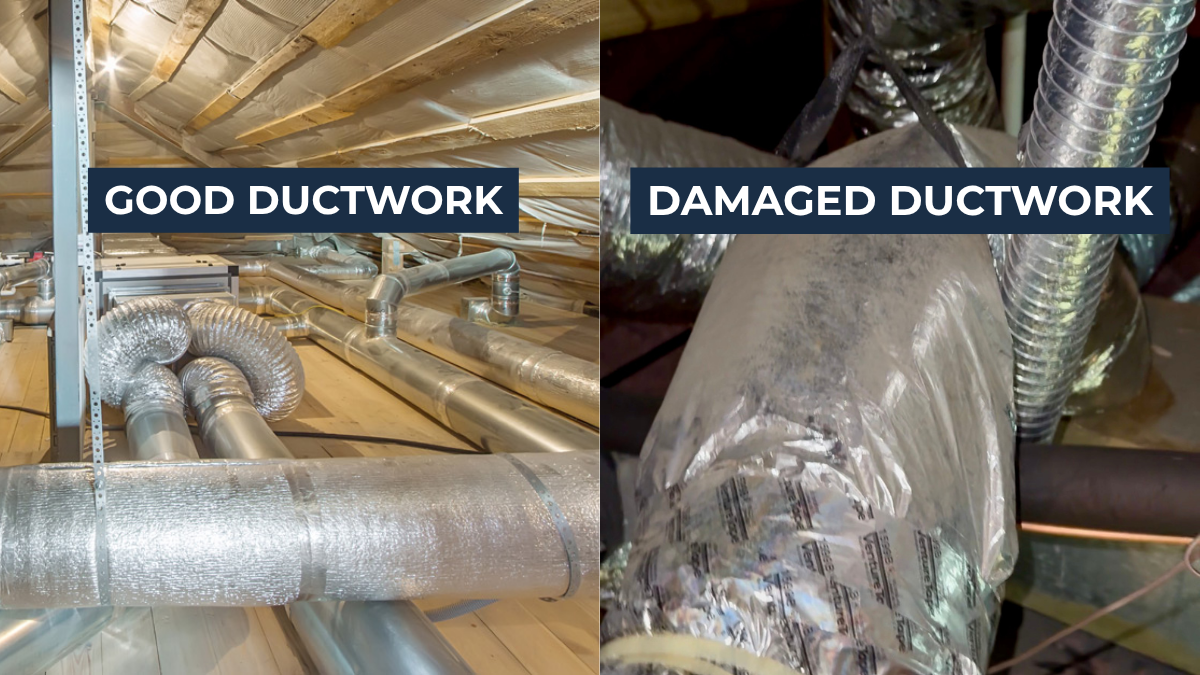
If your ducts are fundamentally sound, replacing them simply because you're replacing your equipment usually isn’t necessary.
You probably don't need new ducts if:
- The ductwork is relatively new.
- It's properly sized for the new equipment.
- The insulation is still in good condition.
- Any air leaks are minor and can be professionally sealed.
- Airflow measurements show the system is performing as designed.
If your home checks those boxes, keeping your existing ductwork is often the right decision.
The decision shouldn't be based on age alone; it should be based on condition, airflow, and design.
If you're dealing with uneven temperatures, airflow issues, or other comfort problems, a Home Comfort Diagnostic can help evaluate what's actually causing the airflow or comfort problem.
When Replacing Your Ducts Makes Sense
There are situations where replacing your ductwork is the right decision. When your ducts can no longer deliver the airflow, comfort, or efficiency your new HVAC system needs, replacement becomes the best solution.
Your Ducts Are Too Small for the New System
Every HVAC system is designed to move a specific amount of air.
If the ductwork is too small or too restrictive, the system can't move enough air, no matter how good the equipment is. It's like asking a healthy pair of lungs to breathe through a narrow straw.
Undersized ductwork can lead to:
- Reduced airflow
- Uneven temperatures throughout the home
- Poor humidity control
- Higher static pressure
- A system that never performs the way it was designed to
If sizing is the problem, modifying or replacing portions of the ductwork may be necessary. We explain more about airflow problems in 7 Signs Your HVAC System Is the Wrong Size.
Your Ducts Are Damaged
Flexible ductwork doesn't last forever. Over time it can become:
- Crushed
- Kinked
- Torn
- Disconnected
- Sagging
- Missing insulation
Sometimes a single damaged section can be repaired. But when damage is widespread, replacing the duct system is often the more practical and cost-effective solution.
Your Ducts Leak More Than They Can Be Repaired
Small leaks at joints and connections are common and are often repaired during an HVAC replacement.
As leaks become more extensive, sealing becomes less effective. Ducts that are disconnected, collapsed, or deteriorated throughout the system are usually better candidates for replacement.
Your Ductwork Contains Wet or Contaminated Fiberglass
Some older homes have duct board or ductwork lined with fiberglass.
If that fiberglass becomes wet or develops biological contamination, the U.S. Environmental Protection Agency recommends replacement because porous fiberglass materials cannot be reliably cleaned or treated.
As fiberglass ages and breaks down, it can also release fine particles that may irritate the skin, eyes, or respiratory system.
For these systems, replacement protects both airflow and indoor air quality.
Your Existing Ductwork Doesn't Match the New Equipment
Not every HVAC system has the same airflow requirements as the one it's replacing.
Many modern systems, particularly variable-speed equipment, are designed to move air differently than older single-stage systems.
Evaluating the existing ductwork helps determine whether it can support the new equipment. If it can't, modifying or replacing portions of the duct system may be necessary.
Repair or Replace?
The right solution depends on the condition of your ductwork and how well it can support your HVAC system.
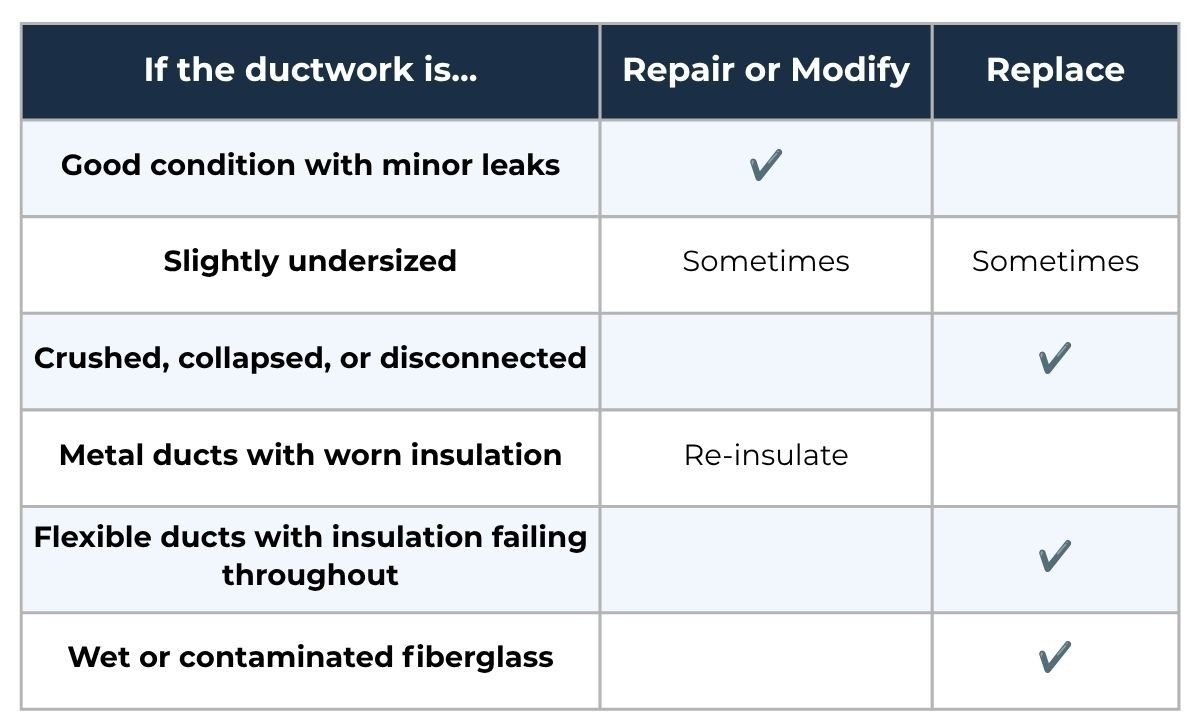
Repairing or replacing ductwork is about giving your new system the airflow it needs to perform well and helping protect your home's comfort and indoor air quality.
Can Bad Ducts Hurt a Brand-New HVAC System?
Yes. Your ductwork can limit how well a new HVAC system performs.
When ductwork is too restrictive, the system has to work harder to move air through the home.
The measure of that effort is called static pressure. Think of it like blood pressure for your HVAC system. As static pressure increases, airflow becomes more difficult and the system has to work harder to do its job.
High static pressure and poor airflow can lead to:
- Less cooling than the system is capable of delivering
- Poor humidity control
- Higher energy use
- More wear on the blower and other components
A correctly sized HVAC system can behave like a much smaller one if it can't move enough air.
Leaks create another problem.
Leaks on the return side can pull hot, humid attic air into the system, increasing the amount of moisture it has to remove. Leaks on the supply side allow conditioned air to escape before it reaches your living spaces.
Your HVAC equipment is designed to operate with a specific amount of airflow. When the ductwork can't provide that airflow, the entire system is affected.
Dark Streaks in Your Attic Insulation Can Be a Sign of Leaky Ducts
Sometimes your attic insulation can point to an airflow problem before anyone measures it.
If you see dark streaks or dusty-looking areas around your duct boots or where ductwork runs through the attic, they may be a sign that air is leaking from the duct system.
Here's why.
Fiberglass insulation doesn't just slow heat transfer. It also traps dust carried by moving air.
When supply ducts leak, conditioned air escapes into the attic. When return ducts leak, they can pull attic air into the system. In both cases, air moves through the insulation around the duct penetrations, leaving behind dust that slowly darkens the fiberglass.
Over time, the insulation can begin tracing the path the moving air is taking.
That pattern is often the clue.
Dark streaks that follow duct runs or surround duct boots may point to air leakage that deserves a closer look.
That said, ductwork isn't the only thing that can create these marks. Air can also move through gaps around recessed lights, attic access doors, plumbing penetrations, and other ceiling openings.
Dark insulation doesn't automatically mean your ducts need to be replaced. It does mean there's enough air movement to justify finding out where it's coming from.
Sometimes the Problem Is the Return, Not the Supply
It's easy to focus on the vents that blow conditioned air into your rooms. Those are the supply ducts.
The return ducts are just as important.
Their job is to pull air from your home back to the HVAC system so it can be conditioned again.
The Air Conditioning Contractors of America (ACCA) designs the return side with the same care as the supply side because both affect system performance.
When a return system can't pull enough air, homeowners may notice:
- Weak airflow
- Higher static pressure
- Noisy operation
- Poor humidity control
- Rooms that never seem comfortable
Comfort depends on moving air into the home just as effectively as it moves air back to the system.
Can Your Existing Ducts Be Repaired Instead?
Often, yes.
When ductwork is in generally good condition, repairing it is frequently the most practical solution.
Common repairs include:
- Sealing leaks at joints and connections with mastic or approved sealants
- Replacing or upgrading damaged insulation
- Reconnecting sections that have separated
- Supporting sagging flexible ductwork
- Correcting minor airflow restrictions
The U.S. Department of Energy and ENERGY STAR both recommend sealing and insulating ductwork when the system is otherwise in good condition.
Sometimes, however, repairs become more extensive than replacement.
When most of the duct runs are crushed, insulation is failing throughout the system, or the ductwork is significantly undersized, replacing the system may provide a better long-term result than repairing individual sections.
How to Tell If Your Ducts Need to Be Replaced
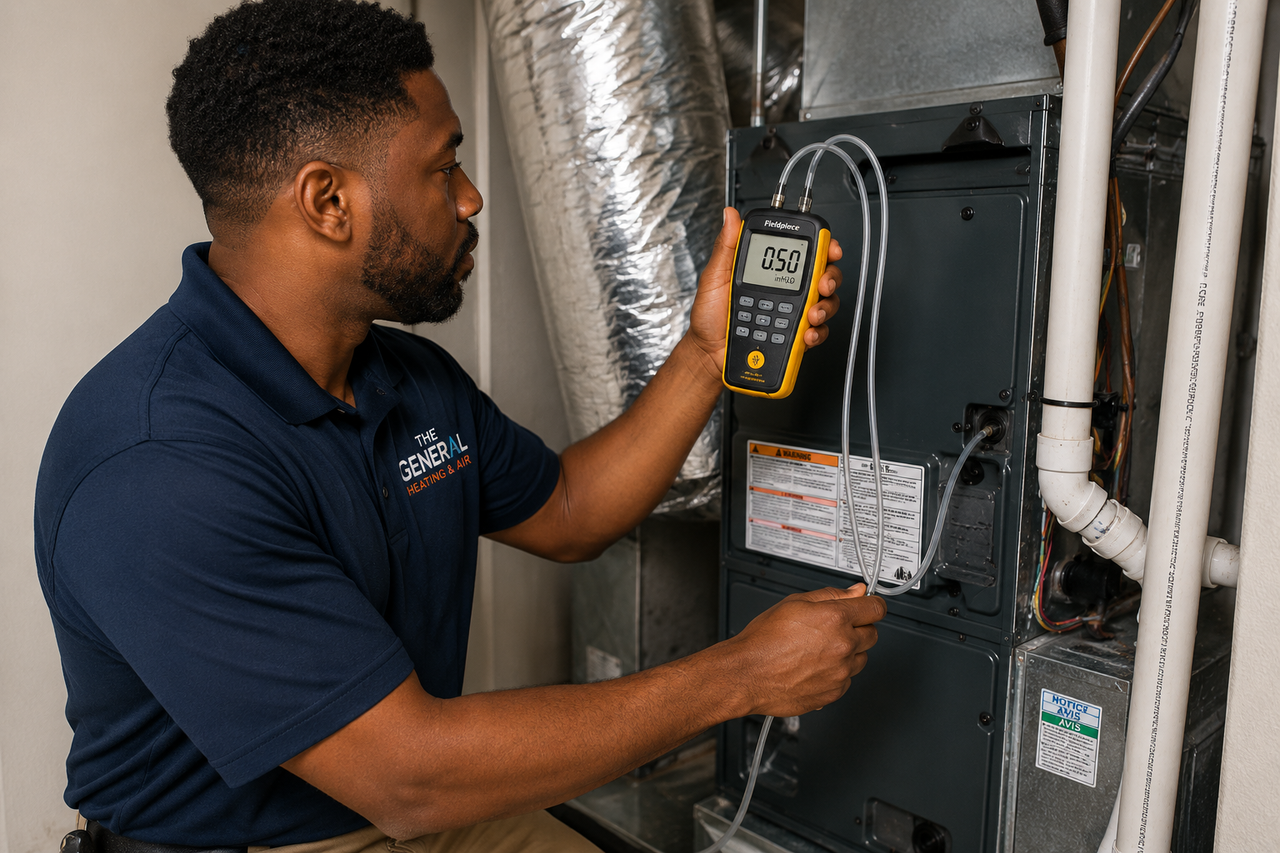
A proper duct evaluation combines a visual inspection with measurements that show how the system is actually performing.
A complete evaluation includes:
Visual Condition
Are the ducts crushed, disconnected, sagging, or missing insulation?
Airflow
Is the system moving the amount of air it was designed to deliver?
Static Pressure
Is the blower working harder than it should to move air through the duct system?
Leakage
How much conditioned air is escaping before it reaches the living space?
ENERGY STAR and the U.S. Department of Energy both recognize duct leakage testing as an important part of evaluating systems with ductwork in unconditioned spaces such as attics.
Room Comfort
Do some rooms stay warmer, cooler, or more humid than others, even when the thermostat is satisfied?
Looking at all of these factors together gives a clear picture of whether the ducts need to be replaced or not
The Bottom Line
When you're replacing your HVAC system, replacing the ductwork isn't automatic.
The decision comes down to four things:
- The condition of the ductwork
- How it was designed
- How well it moves air
- How your home actually feels
Your ductwork isn't separate from your HVAC system.
It's one of the reasons your system either delivers the comfort you paid for or falls short of it.
If you're replacing your HVAC system and wondering whether your ducts should stay or go, we're happy to evaluate both. We'll inspect the ductwork, measure airflow and static pressure, and explain your options so you can make an informed decision based on what your home actually needs.
Schedule a Complimentary System Evaluation or call (832) 558-8539.
Veteran-Owned. Family-Run. Dr. Mom Approved.
Frequently Asked Questions
Can I replace my HVAC system without replacing the ducts?
Often, yes. If your ducts are the right size, in good condition, and aren't leaking significantly, a new HVAC system can usually be installed without replacing them. Replacement becomes necessary when ductwork is damaged, undersized, leaking extensively, or made from materials that can no longer be restored.
Can bad ductwork damage a new HVAC system?
Poor ductwork can reduce performance and increase wear on the equipment. Restricted airflow raises static pressure, making the system work harder than it was designed to.
Can leaky ducts make my house humid?
Yes. Leaks on the return side can pull humid attic air into the system, while poor airflow reduces the system's ability to remove moisture during cooling.
Will new ductwork lower my electric bill?
It can. When existing ductwork leaks air or restricts airflow, replacing or repairing it allows the HVAC system to operate more efficiently. The amount of energy savings depends on the condition of the original ductwork.
Can ductwork be repaired instead of replaced?
Frequently, yes. Many duct systems can be repaired by sealing leaks, reconnecting sections, improving support, or replacing insulation. Replacement becomes the better choice when damage is widespread or the duct system can no longer support the HVAC equipment.
How long does ductwork usually last?
That depends on the material and its condition. Sheet metal ductwork often lasts 20 to 30 years or more. - Flexible ductwork commonly lasts around 15 years. - Fiberglass duct board often lasts 15 to 20 years. Installation quality, attic heat, moisture, and maintenance all affect lifespan.
How do I know if my ducts are too small?
Signs often include: - Weak airflow - Rooms that never seem comfortable - High humidity - Long run times - High static pressure The most reliable way to know is through airflow and static pressure testing.
Does homeowners insurance cover duct replacement?
Sometimes. Coverage usually depends on whether the damage resulted from a covered event, such as a storm, rather than normal aging or wear. Your insurance company and policy determine what is covered.