
Jump to section
Executive Summary
Comparing HVAC installation quotes is about understanding what each contractor is proposing, what's included in the installation, and whether that recommendation is the right fit for your home.
The best HVAC installation quote clearly explains:
- the equipment being installed,
- the scope of work,
- warranty coverage, and
- any additional recommendations. Example
- ductwork
- indoor air quality upgrades
When you know how to compare those details, it becomes much easier to understand why two quotes for the same home can vary so much.
This guide will show you what to look for in an HVAC installation proposal, the questions to ask before approving an estimate, and the warning signs that may indicate important details have been left out.
Introduction
Imagine sitting at your kitchen table with three HVAC installation quotes.
One is $11,000.
Another is $18,500.
The third is just over $30,000.
All three contractors say they're replacing your HVAC system.
So, which one should you choose?
For most homeowners, that's where the confusion begins.
Not sure what a new HVAC system should cost? Try our HVAC Replacement Cost Estimator to see realistic price ranges before you start collecting quotes.
It's tempting to assume the systems are essentially the same and that the biggest difference is price. In reality, HVAC installation quotes often recommend different equipment, include different work, offer different warranties, and solve different problems.
We've worked with homeowners who chose the lowest quote and later discovered important parts of the installation had been left out.
We've also worked with homeowners who invested in premium equipment but experienced major breakdowns shortly after installation because the system wasn't installed correctly.
We've even met homeowners who learned years later that their equipment was never registered for the manufacturer's warranty, turning what should have been a covered repair into a costly surprise.
These aren't stories about people making bad decisions.
They're stories about homeowners trying to compare proposals that aren't easy to compare.
This guide will walk you through the key parts of an HVAC installation proposal, explain what you should compare, and highlight the questions to ask before approving an estimate so you can compare quotes with confidence and choose the solution that's right for your home.

Understanding what's included in each proposal is the key to making a confident HVAC buying decision.
Step 1: Compare What's Included Before You Compare the Price
The total at the bottom of an HVAC installation quote is easy to compare.
What's much harder is comparing everything that went into that number.
Two contractors can recommend similar equipment yet propose very different installations. One quote may include everything needed for a complete system replacement, while another leaves out important work, warranties, or accessories that affect the system's performance and long-term value.
Before you compare prices, compare what's included.
As you read through this guide, we'll explain each part of an HVAC installation proposal, why it matters, and the questions you should ask when comparing estimates.
When you're finished, download our HVAC Quote Comparison Worksheet to compare up to three proposals side by side and keep all of your notes in one place.
You'll Learn How to Compare:
Equipment
- Equipment type (heat pump or furnace and air conditioner)
- Equipment efficiency
- Single-stage, two-stage, or variable-speed equipment
- Manufacturer-approved matched systems
Home Evaluation
- Manual J load calculations
- Ductwork evaluations
- Airflow recommendations
- Comfort concerns discussed during the estimate
Installation Scope
- Refrigerant line set replacement or reuse
- Thermostat and controls
- Drain line and electrical modifications
- Permits and other installation details
Warranty
- Manufacturer's warranty
- Labor warranty
- Equipment registration
Price Differences
- Why one quote may cost significantly more or less than another
- How to compare value instead of just price
- Warning signs that deserve a closer look
Download the HVAC Installation Quote Comparison Worksheet to compare the equipment, installation scope, warranties, and recommendations.
Compare the Equipment Recommendations
One of the first things you'll notice is that not every contractor recommends the same equipment.
One quote may recommend a heat pump.
Another recommends a gas furnace and air conditioner.
One contractor recommends single-stage equipment, while another recommends variable-speed equipment.
Different recommendations don't necessarily mean one contractor is right and the other is wrong. They may simply have different approaches to solving your home's heating and cooling needs.
Before making a decision, understand why each contractor recommended that equipment.
Compare the Type of System
If one contractor recommends a heat pump and another recommends a furnace and air conditioner, ask why.
Their recommendation may be based on:
- Your existing equipment
- Your utility costs
- Your comfort preferences
- Your home's electrical or gas service
- Available rebates or tax incentives
If you aren't sure which option is right for your home, ask each contractor to explain why they recommended that system over the alternatives.
Related Reading: Heat Pump vs. Furnace and Air Conditioner: Which Is Better for Your Home?
Compare the Equipment Itself
Even when two contractors recommend the same type of system, the equipment itself may be different.
Compare:
- Equipment efficiency
- Single-stage, two-stage, or variable-speed operation
- Sound ratings
- Manufacturer warranty
- Features that improve comfort and humidity control
Understanding these differences will help you determine whether the additional features are worth the investment for your home.
Related Reading: Single-Stage vs. Two-Stage vs. Variable-Speed HVAC Systems
Make Sure the System Is Properly Matched
An HVAC system isn't a single piece of equipment.
It's a combination of components designed to operate together.
A manufacturer-approved matched system has been tested and certified as a complete system. Mixing indoor and outdoor components that weren't designed to work together can affect efficiency, performance, and warranty coverage.
Ask the contractor to confirm that the equipment they're proposing is a manufacturer-approved matched system.
You don't need to memorize model numbers or understand AHRI certificates. You simply need to know the equipment has been selected to operate together as intended.
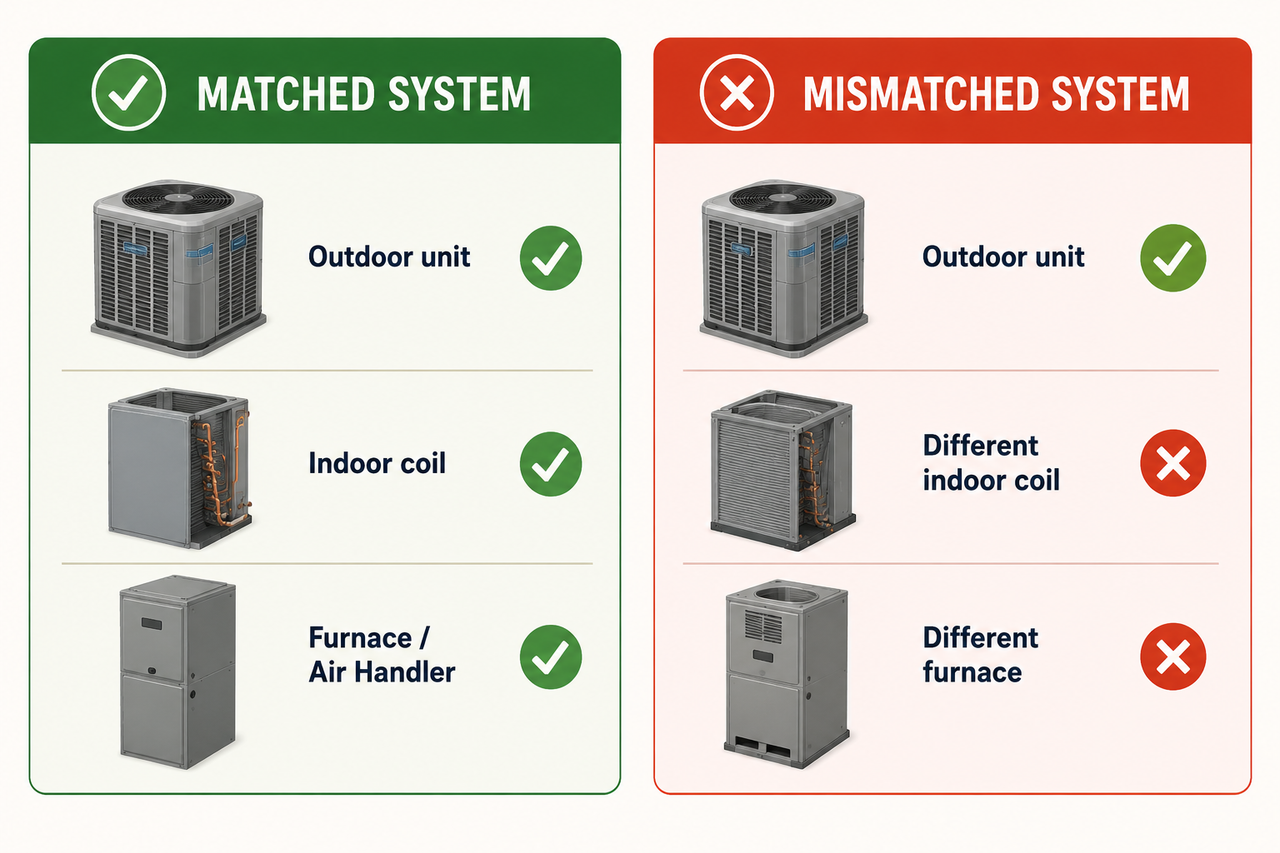
An HVAC system isn't a single piece of equipment. It's a group of components designed to work together.
Compare How Each Contractor Evaluated Your Home
A quality HVAC installation starts with a thorough home evaluation.
The questions a contractor asks, the measurements they take, and the areas they inspect all influence the recommendations you'll receive.
If two contractors spend very different amounts of time evaluating your home, there's a good chance their proposals will be very different, too.
Did They Perform a Load Calculation?
One of the most important parts of designing an HVAC system is determining how much heating and cooling your home actually needs.
This process is called a Manual J load calculation.
It considers factors like:
- Your home's square footage
- Insulation levels
- Windows and doors
- Ceiling height
- Sun exposure
- Number of occupants
- Other factors that affect heating and cooling demands
Without a load calculation, equipment sizing is often based on rules of thumb instead of your home's actual needs.
Related Reading: What Is a Manual J Load Calculation and Why Does It Matter?
Did They Evaluate Your Ductwork?
Your HVAC system can only perform as well as the ductwork delivering the air.
If your ducts are undersized, leaking, poorly insulated, or improperly designed, replacing the equipment alone may not solve your comfort problems.
Ask whether the contractor:
- Inspected your existing ductwork
- Measured airflow
- Looked for damaged or leaking ducts
- Recommended repairs only if they found a problem
Not every home needs new ductwork.
But every home should have its ductwork evaluated before a new HVAC system is installed.
Related Reading: Do I Need to Replace My Ductwork When I Replace My HVAC System?
Did They Ask About Your Comfort Problems?
Your new HVAC system shouldn't just replace old equipment.
It should solve the problems you've been living with.
During the estimate, your contractor should ask questions like:
- Are some rooms always hotter or colder than others?
- Does your home feel humid in the summer?
- Is your system noisy?
- Do you have allergies or indoor air quality concerns?
- Are your utility bills higher than expected?
If no one asked about the problems you're trying to solve, it's worth asking how those recommendations were made.
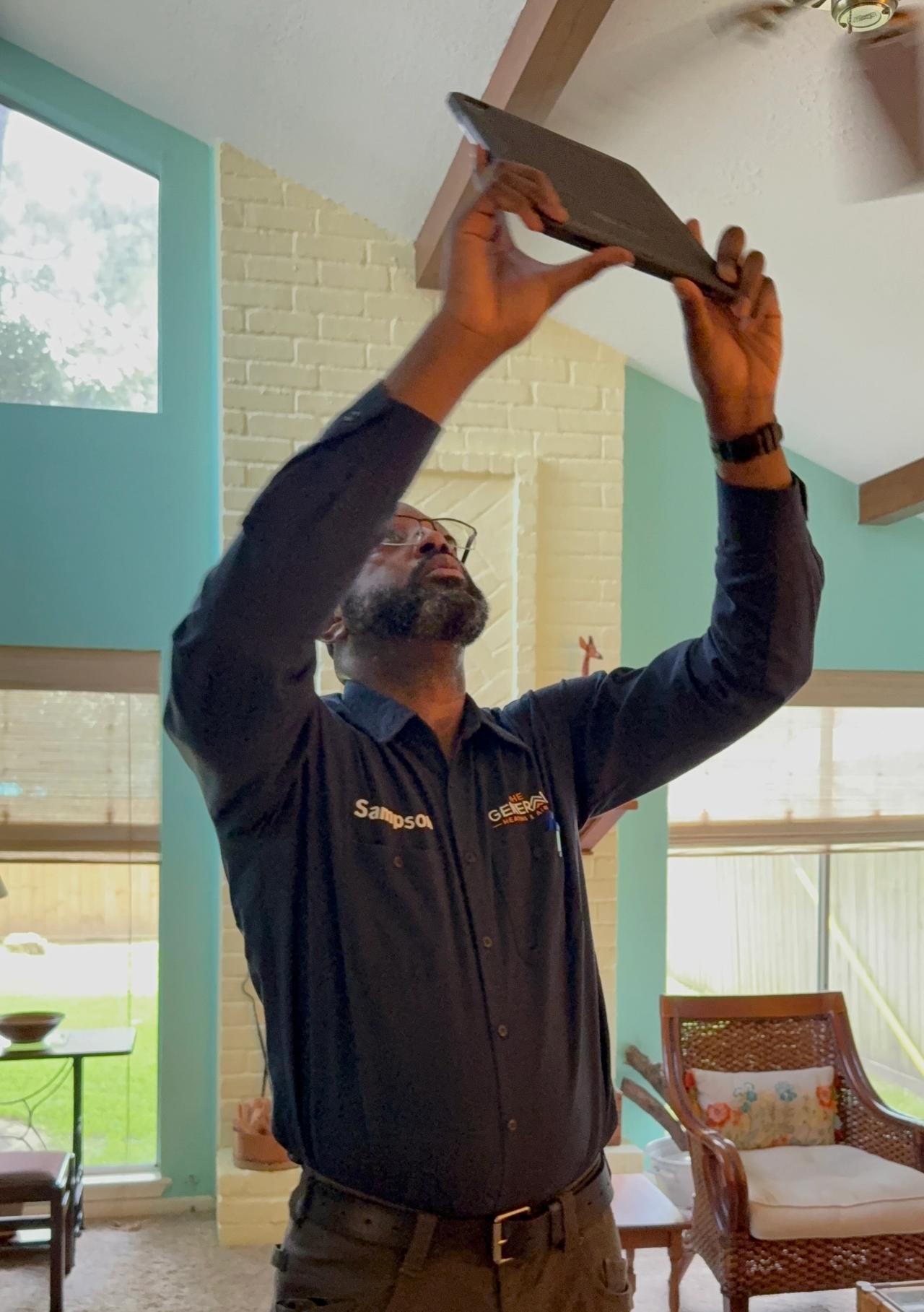
A quality HVAC proposal starts with understanding your home, not choosing equipment first.
Compare the Scope of Work
Two quotes can recommend the exact same HVAC system and still have very different scopes of work.
That's because the equipment is only part of the installation.
How the system is installed has a direct impact on its performance, efficiency, reliability, and lifespan.
When you're reviewing an estimate, don't just compare the equipment. Compare everything the contractor plans to do during the installation.
Does the Quote Explain What's Included?
A detailed proposal should clearly explain the work being performed.
For example, does it include:
- Installing the new indoor and outdoor equipment
- Removing and disposing of the old system
- Replacing or evaluating the refrigerant line set
- Installing a new thermostat
- Modifying the condensate drain, if needed
- Electrical connections and disconnects
- Startup and system testing
- Cleanup after the installation
If those items aren't listed, ask whether they're included.
Has the Contractor Addressed Existing Problems?
A new HVAC system shouldn't ignore problems that already exist.
For example:
- A clogged or poorly designed drain line
- Airflow restrictions
- Damaged ductwork
- Improper equipment clearances
- Electrical concerns
- Water management around the equipment
Replacing the equipment without addressing those issues can leave existing problems unresolved or create new ones.
Don't Assume Every Installation Includes the Same Work
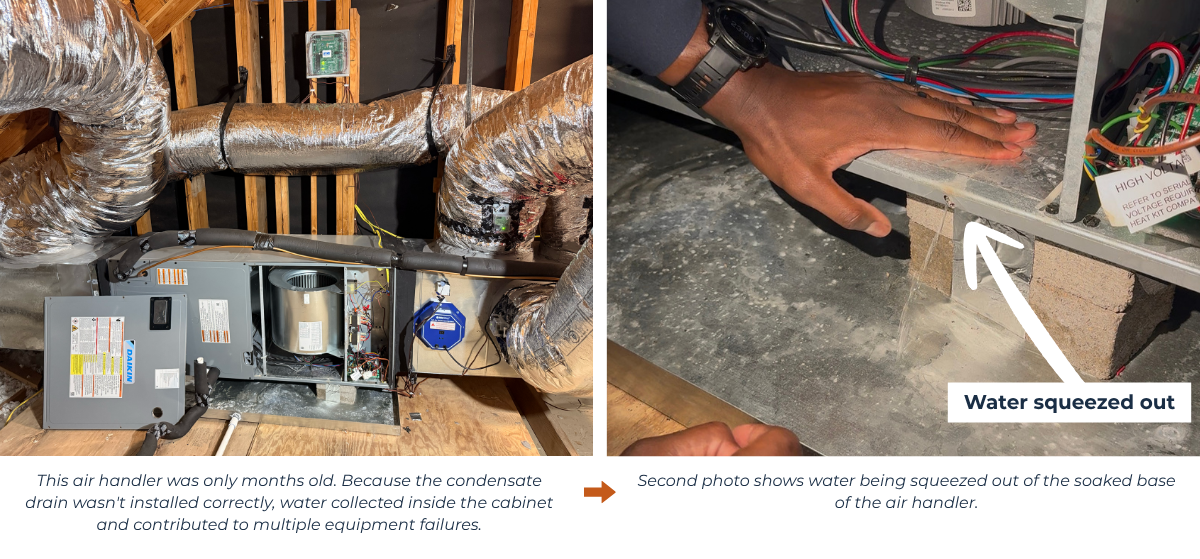
One homeowner we worked with chose a significantly lower quote for two premium variable-speed Daikin heat pumps and new ductwork.
On paper it looked like an incredible deal, in reality it was an installation nightmare.
The drain line wasn't routed correctly.
The secondary drain was capped instead of allowing it to protect the system if the primary drain became blocked.
A flue pipe from the previous gas furnace was left open after the new heat pumps were installed.
Within months, the homeowner experienced condensation problems, airflow issues, and multiple equipment failures. More than $3,000 was spent on repairs within the first six months after installation.
The equipment wasn't the problem.
The installation was.
Questions to Ask About the Installation
Before approving an estimate, ask:
- What work is included besides replacing the equipment?
- Are you reusing the existing refrigerant line set? If so, why?
- Did you find any existing issues that should be corrected during the installation?
- What testing will be performed before the job is complete?
- What work is specifically not included in this proposal?
Compare the Warranty
When reviewing HVAC installation quotes, you'll typically see two different warranties:
- The manufacturer's warranty, which generally covers replacement parts if a component fails.
- The contractor's labor warranty, which covers the labor required to diagnose the problem and replace those parts.
Compare the Manufacturer's Warranty
Most new HVAC systems include a manufacturer's parts warranty.
For most manufacturers, the standard parts warranty is five years if the equipment isn't registered and 10 years if it is registered. (Daikin is a notable exception, offering six years unregistered and 12 years when registered.)
That's why it's important to ask:
- How long is the manufacturer's warranty?
- Does the equipment need to be registered to receive the full warranty?
- Who is responsible for registering it?
- Will I receive confirmation once it's been registered?
Don't assume the equipment will be registered automatically.
Compare the Labor Warranty
The manufacturer's warranty usually doesn't pay for the labor required to replace a failed part.
That's where the contractor's labor warranty comes in.
When comparing estimates, ask:
- How long is the labor warranty?
- What does it cover?
- Are there any exclusions?
- Is it backed by your company or a third-party warranty provider?
Two contractors may offer the same equipment with the same manufacturer's warranty but very different labor warranties.
Make Sure the Equipment Is Registered
We recently spoke with a physician who shared her experience after replacing her HVAC system.
She experienced installation problems almost immediately. Years later, her compressor failed.
That's when she discovered the equipment had never been registered with the manufacturer.
Instead of receiving the longer warranty she expected, the warranty had already expired. She was left facing thousands of dollars in repair costs that could have been avoided if the equipment had been properly registered after installation.
Before approving an estimate, ask one simple question:
Who is responsible for registering my equipment, and how will I know when it has been completed?
Questions to Ask About the Warranty
- What manufacturer's warranty comes with this equipment?
- What labor warranty do you provide?
- Who registers the equipment?
- Will I receive confirmation after the equipment has been registered?
- Is there anything I need to do as the homeowner?
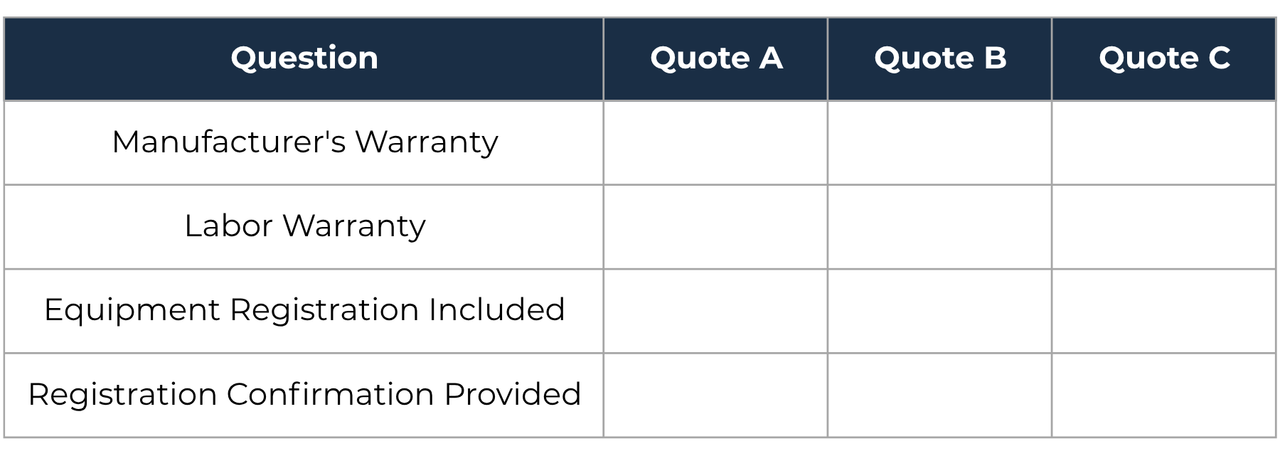
Manufacturer warranties and labor warranties are separate. Compare both before approving an HVAC installation proposal.
Why Is One HVAC Quote Thousands of Dollars Less Than the Others?
Finding a quote that's several thousand dollars less than the others can feel like a win.
Sometimes it is.
Other times, it's a sign that the proposals aren't including the same work.
A lower price doesn't automatically mean something is wrong, but it should prompt you to ask one important question:
Why is this quote less expensive?
If you're still trying to understand what a new HVAC system typically costs, our HVAC Replacement Cost Estimator can help you establish a realistic starting point before comparing proposals.
A Lower Price Can Mean a Smaller Scope of Work
When comparing proposals, look for differences like:
- Less expensive equipment
- Existing components being reused instead of replaced
- Ductwork that's excluded from the proposal
- Fewer included accessories
- Shorter labor warranty
- Warranty registration not included
- Less installation labor
- Existing issues that won't be addressed during the installation
Any one of those items can affect the total price.
Several of them together can create a difference of thousands of dollars.
Real Example: The $30,000 Quote vs. the $11,000 Quote
One homeowner received two proposals for what appeared to be the same job.
One was approximately $30,000.
The other was about $11,000.
There was duct work recommended with the higher option which made the biggest difference.
They chose the lower-priced option.
When we were later called to repair the system that had failed, it became clear why the price was so different.
The outdoor condenser was an Amana unit.
The evaporator coil was from a different manufacturer.
The furnace was so old that its data plate was no longer readable, making it impossible to identify the manufacturer or verify what it was.
Instead of receiving a properly matched HVAC system, the homeowner ended up with equipment from multiple sources that wasn't designed or certified to operate together.
They also didn’t follow the duct work recommendation and that was the reason the unit failed. There was not enough return air to the unit which put it under strain and caused a major component of the indoor unit to fail.
They thought they had found the same system for nearly $20,000 less.
Instead they purchased a patched system that was void of its manufacturer warranty and needed major repairs less than 5 years after installation.
Verify That You're Getting a Completely New HVAC System
There are legitimate reasons one proposal may cost less than another. One contractor may recommend a single-stage system while another recommends a variable-speed system. One proposal may include new ductwork while another doesn't.
But when the price difference is many thousands of dollars, it's worth taking a much closer look at what's being installed.
In our industry, we've seen cases where contractors install used equipment, combine components from different systems, or reuse equipment removed from another home instead of installing a complete, manufacturer-approved matched system.
For example, a homeowner may replace an entire HVAC system because the outdoor unit failed, even though the indoor coil or furnace still works. Those remaining components can sometimes end up installed in another home.
If you're paying for a new HVAC system, ask whether every major component is new, matched, and covered by the manufacturer's warranty.
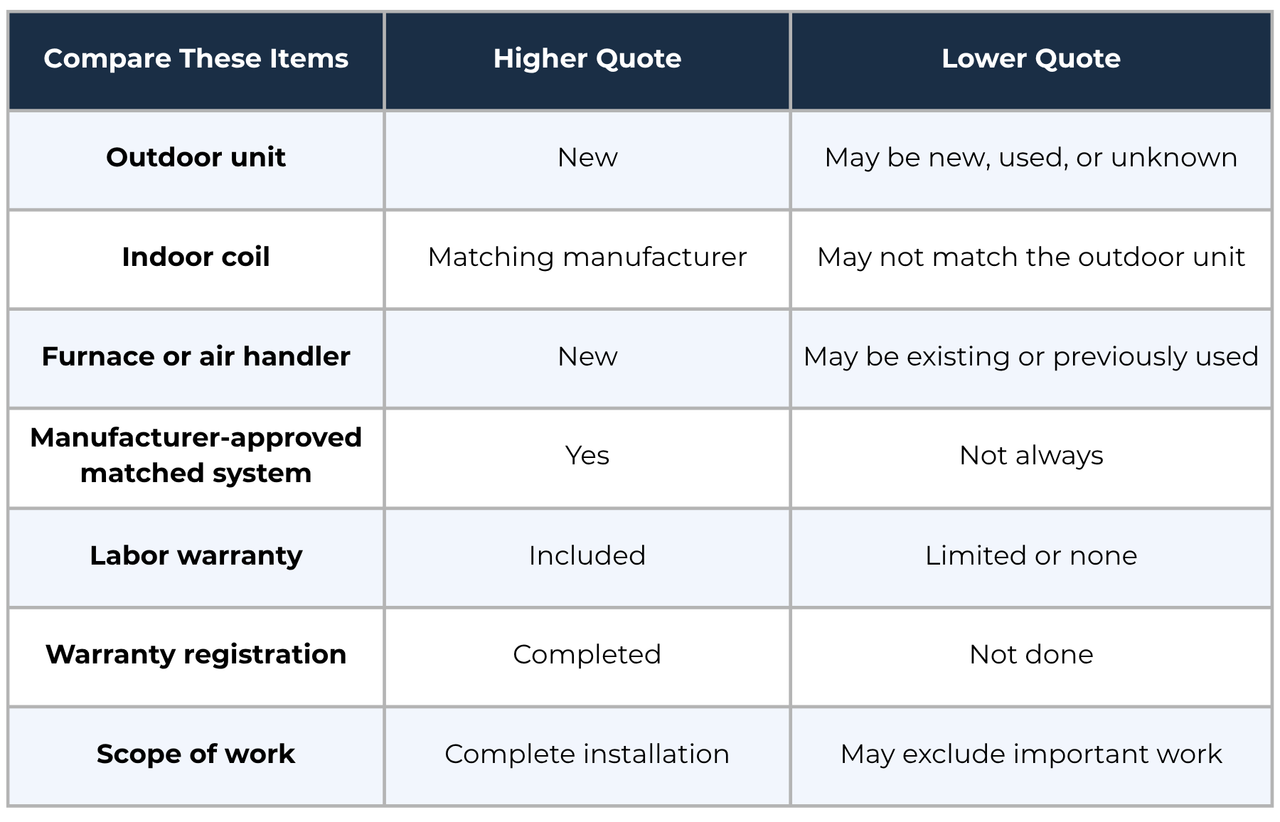
Two proposals can differ by thousands of dollars because they include completely different equipment, warranties, and scopes of work—not just different prices.
Most HVAC contractors are honest professionals who take pride in their work. Unfortunately, dishonest practices do exist. That's why it's important to verify what you're buying instead of assuming every proposal includes the same equipment and services.
Download the HVAC Quote Comparison Worksheet
We've covered a lot throughout this guide.
From comparing equipment recommendations and home evaluations to reviewing installation details, warranties, and pricing, there are many factors that can influence which proposal offers the best value.
Rather than trying to remember everything during each sales appointment, use our HVAC Quote Comparison Worksheet to keep all of the important details in one place.
The worksheet summarizes every major point covered in this guide and gives you space to compare up to three HVAC installation quotes side by side.
Use it to organize your notes, identify important differences, and compare each proposal before making your final decision.

Download the HVAC Quote Comparison Worksheet
Conclusion
Comparing HVAC installation quotes isn't about finding the lowest price.
It's about understanding what's included, why it was recommended, and whether you're comparing equivalent systems.
Throughout this guide, we've looked at the factors that matter most. From equipment recommendations and home evaluations to installation quality, warranties, and pricing differences.
When you understand those details, you're much more likely to choose a system that delivers the comfort, efficiency, and reliability you're expecting.
If you're collecting estimates now, download our HVAC Quote Comparison Worksheet and use it during each appointment. Having the right questions—and a place to record the answers—can make it much easier to compare proposals side by side and choose the one that offers the best value for your home.
An HVAC system is one of the largest investments you'll make in your home. Taking the time to compare proposals carefully can help you avoid costly surprises and choose a system you'll feel confident about for years to come.
Still deciding whether the quotes you're receiving are in the right range? Before making your final decision, use our HVAC Replacement Cost Estimator to compare your estimates against typical replacement costs.
Frequently Asked Questions
How many HVAC quotes should I get?
For most homeowners, three quotes is enough. Getting multiple estimates gives you a better understanding of the equipment being recommended, the scope of work, and the range of pricing in your area. If one proposal is significantly higher or lower than the others, ask the contractor to explain why before making a decision.
Should I always choose the lowest HVAC quote?
Not necessarily. A lower price may reflect a less expensive system, a smaller scope of work, fewer included services, or a shorter labor warranty. In some cases, it may also indicate used or mismatched equipment. The goal is to understand what you're getting for the price, not simply choose the lowest number.
Why do HVAC installation quotes vary so much?
HVAC proposals can differ because of: The type and efficiency of the equipment Whether ductwork modifications are included The amount of installation labor Warranty coverage Accessories such as thermostats or air quality products The contractor's recommendations for your home Even when two quotes appear similar, the details may be very different.
Can two contractors recommend different system sizes?
Yes. Different contractors may perform different evaluations or interpret your home's heating and cooling needs differently. If one contractor recommends a significantly different system size than another, ask how they arrived at that recommendation and whether they performed a Manual J load calculation.
What should be included in an HVAC installation quote?
A detailed proposal should clearly identify: The equipment being installed The scope of work Warranty information What's included in the installation What's excluded from the proposal The total installed price If any of those details are missing, ask the contractor to clarify them before signing a contract.
Is it okay to ask a contractor to explain their quote?
Absolutely. A quality HVAC contractor should be able to explain their recommendations, answer your questions, and make sure you understand what you're buying. If something in the proposal isn't clear, ask for an explanation before making your decision.