Jump to section
If you're replacing your HVAC system, you've probably run into terms like:
- Single-stage
- Two-stage
- Variable-speed
- Inverter-driven
- Modulating
Those terms can be confusing.
It gets harder when you look at a few quotes and see that one system costs thousands of dollars more than the next. And a lot of the marketing makes it sound like newer always means better.
So you're left with a fair question: what is the real difference between these systems, and does it matter for your home?
The good news is that this is easier to understand than it looks. By the end, you'll know how each system works, how it affects comfort and humidity, and how to pick the one that fits your home.
Executive Summary
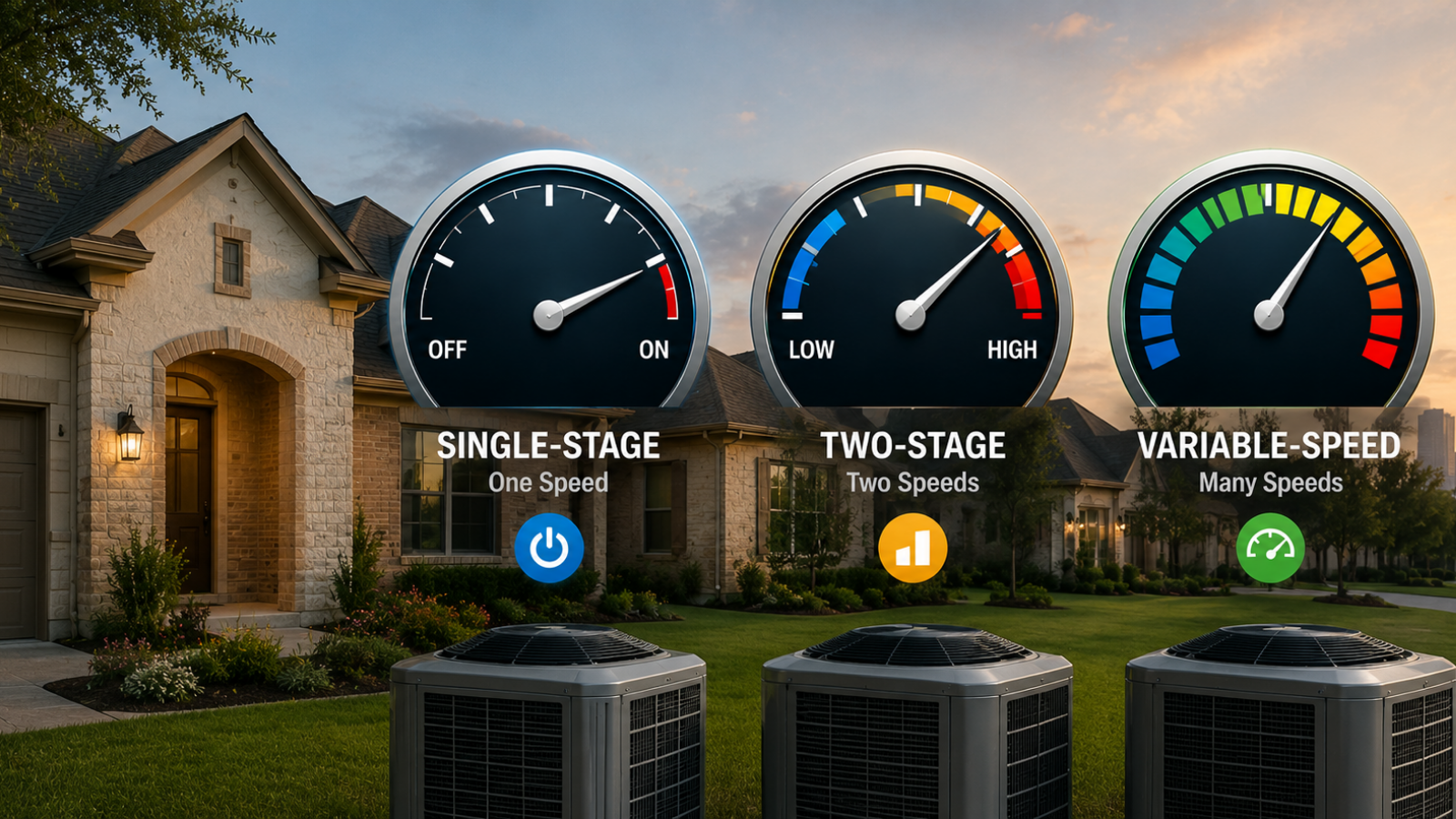
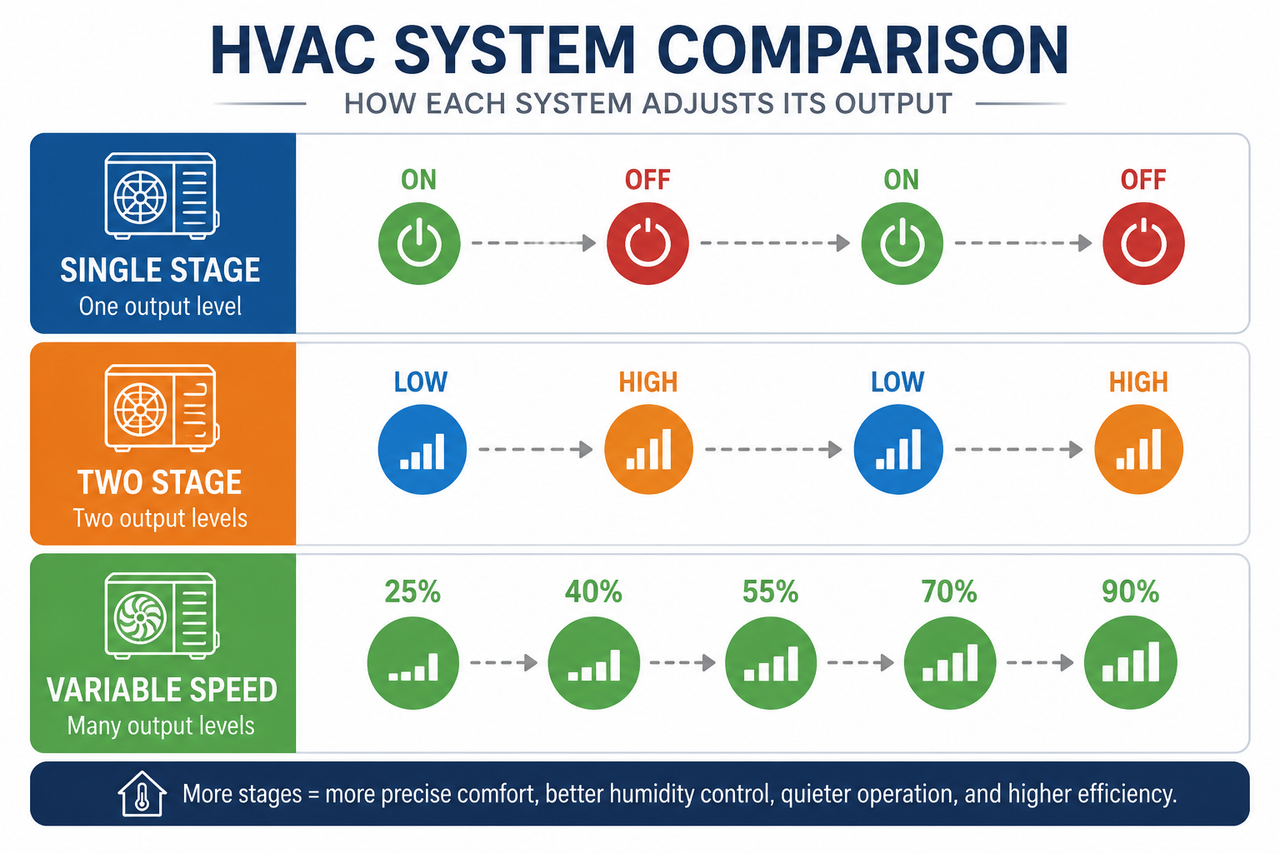
It all comes down to one idea: how much the system can change its output.
A single-stage system is either on or off.
A two-stage system has a low setting and a high setting.
A variable-speed system can change its output little by little across a wide range.
How do you choose?
For most Houston homeowners, the choice comes down to four things: comfort, humidity control, how long you plan to stay, and budget. Consider the following:
- Single-stage systems cost the least to buy and work well when budget comes first.
- Two-stage systems give you better comfort and humidity control without the highest price.
- Variable-speed systems give you the steadiest comfort, the best humidity control, the quietest operation, and the highest efficiency. They also cost more, and they can cost more to fix once the warranty ends.
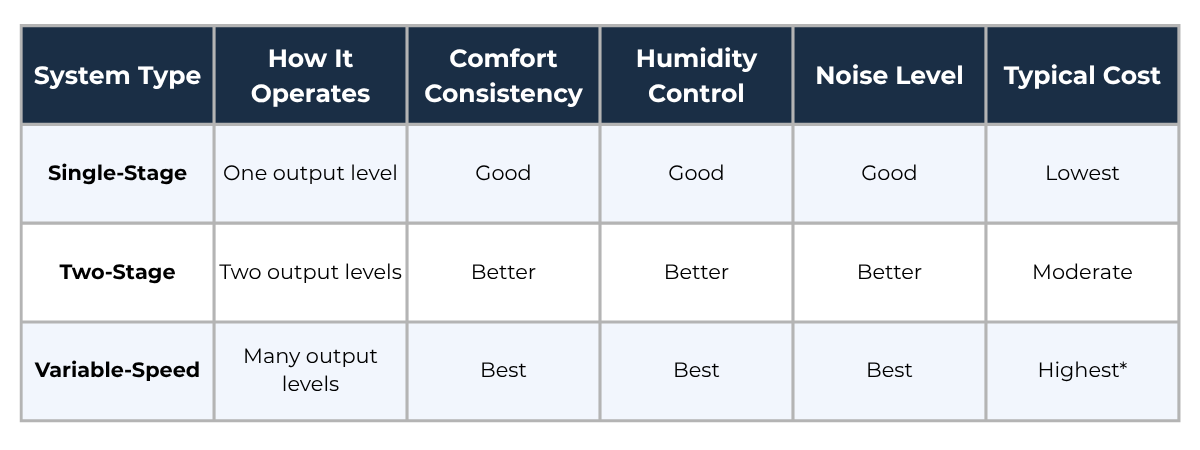
*Not always. Maker pricing, rebates, promotions, and equipment packages can sometimes make the prices overlap.
What Does "Stage" Mean?
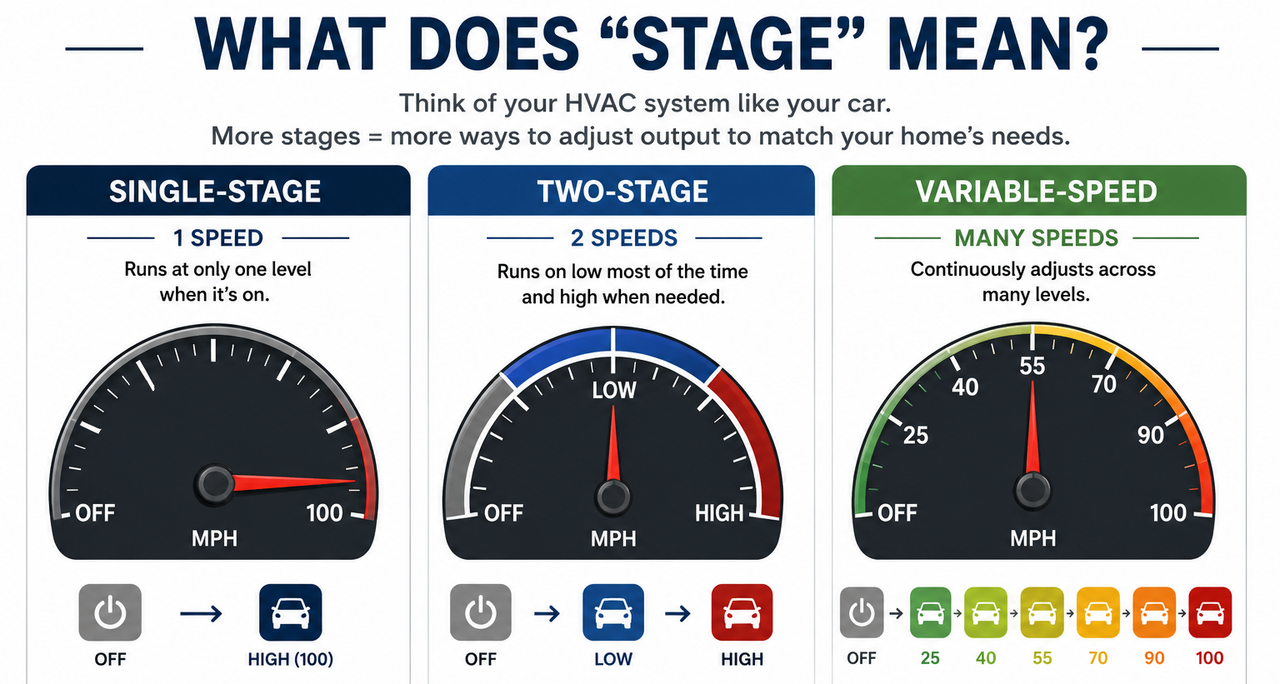
The word "stage" means how many output levels your HVAC system can run at.
Think about driving a car. A single-stage system is like having one speed any time you move. A two-stage system gives you a slow speed and a fast speed. A variable-speed system lets you change your speed little by little as you go.
So the difference between single-stage, two-stage, and variable-speed equipment is really just how many levels the system can run at.
What Is a Single-Stage HVAC System and How Does It Work?
A single-stage system has only one speed: full power.
When your thermostat calls for cooling, the system turns on all the way. When the room reaches the temperature you set, it shuts off. There's nothing in between, no lower setting and no slow ramp-up. It's either running or it's not.
For many years this was the normal type of system, and plenty of homeowners still pick it today.
Advantages of Single-Stage Systems
Lower cost to buy. Single-stage systems usually cost the least, which helps when budget comes first.
Simpler to run. They have fewer settings and fewer complex controls than fancier systems. That doesn't make them more reliable on its own, but there are fewer parts that can act up.
Familiar. Many homeowners have lived with this kind of system for years and know just how it acts.
What Does a Single-Stage System Feel Like in Everyday Use?
Because it always runs at full power, a single-stage system turns on and off more often. You may feel bigger temperature swings, more starts and stops, more difference from room to room, and more noise each time it kicks on.
Whether that bothers you depends on your home and on you. In some homes you never notice it. In others, it's the main reason people start looking at a better system.
What Is a Two-Stage HVAC System and How Does It Work?
A two-stage system adds a second level.
It spends most of its time running at a lower, quieter setting and turns up only when it needs to.
Most of the time it runs on low. When it gets hotter or the home needs more cooling, it shifts to high. Instead of going full blast every time, it adjusts to what the day needs.
Advantages of Two-Stage Systems
Steadier temperatures. Running longer on low keeps the temperature swings smaller, so the home feels more even from room to room.
Quieter. Running on low is quieter than full blast, and you can hear the difference inside and out.
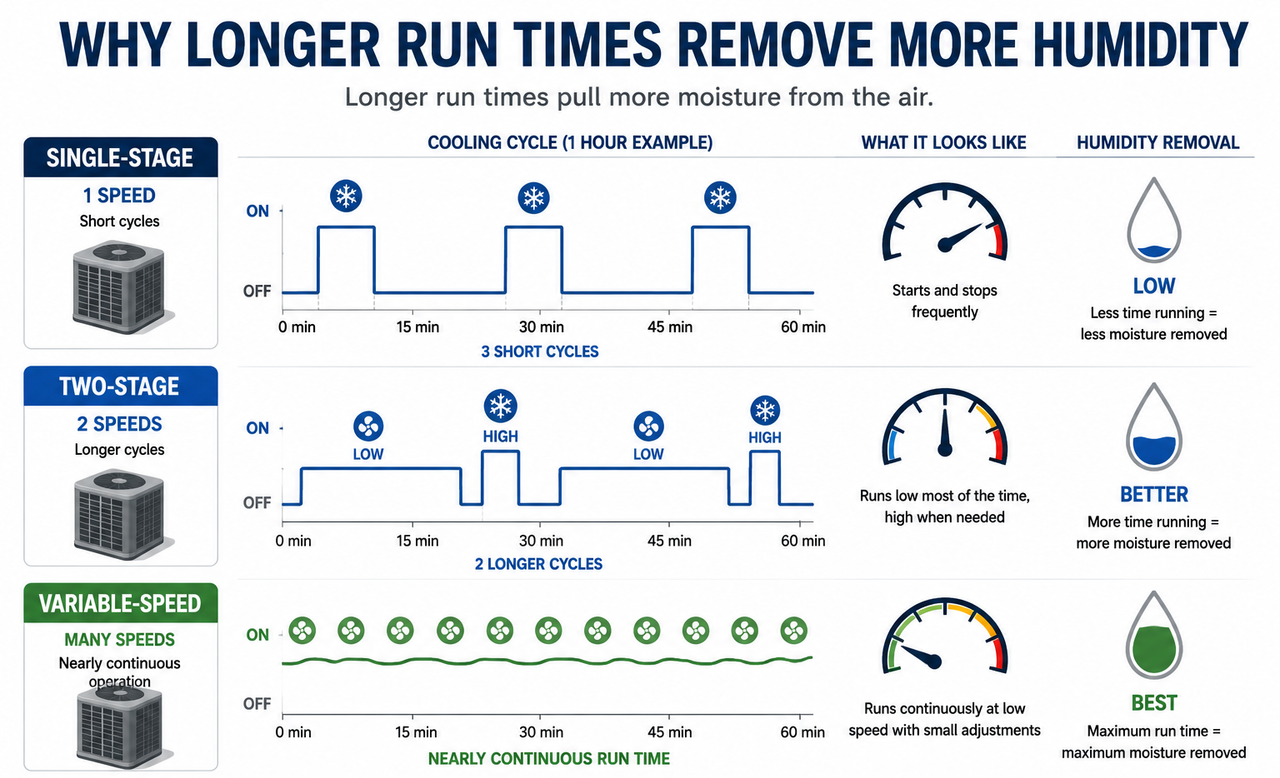
Better humidity control. Longer run times pull more moisture out of the air, which matters a lot in Houston.
A nice middle ground. For many homeowners, two-stage is the practical pick. You get real comfort gains without the full cost of variable-speed.
What Does a Two-Stage System Feel Like in Everyday Use?
People often say a two-stage system feels steadier, quieter, and less drafty, especially in mild weather. The home feels more even because the system spends more time on low instead of slamming between full power and off.
What Is a Variable-Speed HVAC System and How Does It Work?
A variable-speed system changes its output all the time to match what your home needs.
Instead of jumping between full power and off, it makes small changes as conditions change. If the home needs just a little cooling, it runs low. As it gets hotter, it ramps up. The changes are small and steady instead of big and sudden.
Advantages of Variable-Speed Systems
Steadiest comfort. Because it adjusts all the time, the temperature stays even, with fewer hot and cold spots.
Best humidity control. It often runs longer on low, and those longer runs pull out more moisture. In a Houston summer, that's worth a lot.
Quietest. Most of the time it runs well below full power, so it's much quieter inside and out.
Best efficiency. Running on low for long stretches saves energy, which is why these systems often have the highest efficiency ratings in a brand's lineup.
What Does a Variable-Speed System Feel Like in Everyday Use?
People rarely point to one big change with a variable-speed system. They just say the home feels more comfortable, more even, quieter, and better on humidity all day.
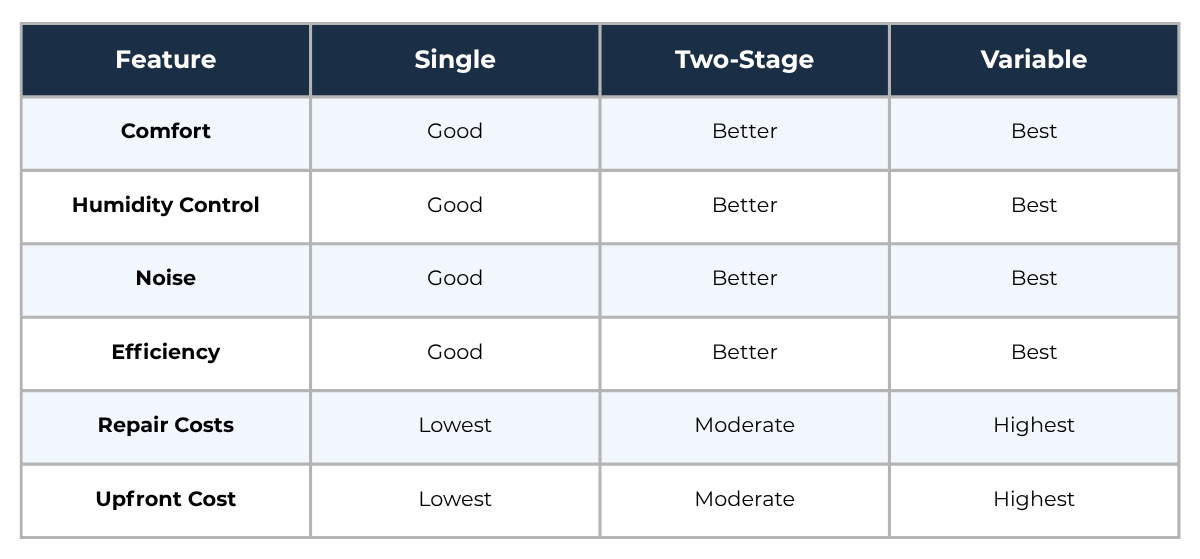
Single-Stage vs Two-Stage vs Variable-Speed: Key Differences at a Glance
What Does "Inverter-Driven" Mean?
You'll often hear variable-speed and inverter-driven together. They're related, but they're not the same.
Variable-speed is what the system does. An inverter is one of the parts that lets it do that. The inverter controls how much power goes to the compressor so it can speed up or slow down as things change.
For most homeowners, the difference isn't worth worrying about. If a contractor talks about inverter-driven equipment, they usually mean a system that can change its output across a wide range.
Where Do Heat Pumps Fit In?
Here's a point that trips a lot of people up, because two different choices get mixed into one.
Single-stage, two-stage, and variable-speed tell you how a system changes its output.
Heat pump versus regular air conditioner tells you how a system makes heat.
Those are two different questions, and one does not decide the other. Read more about the difference in our article Heat Pump vs Traditional Air Conditioner: Which Is Better for Houston Homes?
A heat pump can be single-stage, two-stage, or variable-speed, just like a regular air conditioner can. Picking a heat pump for its heating and efficiency does not force you into a top-of-the-line variable-speed system, and picking variable-speed does not mean you need a heat pump. You can mix and match.
So when you compare quotes, it helps to split the two choices in your head:
- How you heat: a heat pump, or a regular air conditioner with a furnace.
- Staging: single-stage, two-stage, or variable-speed.
A contractor might suggest a two-stage heat pump, a variable-speed heat pump, or a single-stage air conditioner. Each one can be a good fit for a different set of needs. The staging part of this article works for both heat pumps and regular systems.
If you're weighing the heating side of the choice, our guide on heat pumps versus traditional air conditioners covers which one tends to fit a Houston home better.
Why Humidity Changes the Conversation in Houston
In Houston, humidity control is often the main reason homeowners move past single-stage equipment.
As I explain in Why Your House Feels Humid (and Why It Gets Worse During Allergy Season), temperature and comfort are not the same thing. You've probably walked into a house that said 72 degrees on the thermostat and still felt sticky.
That's because an air conditioner doesn't just lower the temperature. It also pulls water out of the air. And that's where staging starts to matter.
Single-stage systems run shorter cycles because they always run at full power. A cycle is one round of cooling. Your single-stage system blasts on to cool the home down to the temperature you set. Once it gets there, it shuts all the way off until the temperature rises again and it blasts back on. Blast to blast is one cycle.
Two-stage systems often run longer on low. Variable-speed systems run longer still while always adjusting. Those longer runs give the system more chances to pull out moisture. That's one reason homeowners in Southeast Texas feel a difference between these systems.
What Else Affects Comfort?
It's normal to focus on the equipment, since it's the biggest line on the quote. But comfort depends on more than the box.
Right sizing. A system that's too big cools fast but doesn't pull out enough moisture. One that's too small falls behind on the hottest days. I cover this in 7 Signs Your HVAC System Is the Wrong Size (Houston Homeowners Guide).
Airflow and ductwork. Your system can only deliver comfort if air moves through the home well. Ducts carry cooled air to the rooms and bring it back to the system. How much air moves through them affects comfort, efficiency, humidity, and how well everything works. Duct or airflow problems can cause hot rooms, cold rooms, humidity trouble, extra noise, and higher bills no matter which stage you pick.
Install quality. Even great equipment runs poorly when it's put in wrong. Checking the refrigerant on install day, getting the ducts up to standard and sized for good airflow, making solid electrical connections, and following the maker's directions all protect a big purchase, no matter the stage. We run a third-party check called MeasureQuick after every install to make sure the system is working right, and we give you the paperwork for your records.
Which System Is Most Reliable?
A question we hear a lot is, "Which system will be the most reliable?"
There's no clean answer, because reliability depends on install quality, maintenance, how hard the system runs, the design, and how well it was built, all at once. No stage wins this on its own.
A well-installed, well-maintained single-stage system can last a long time. So can a well-installed, well-maintained variable-speed system. The stage by itself does not decide whether the equipment will be reliable.
In many cases, how well the system is installed matters more than whether it's single-stage, two-stage, or variable-speed.
The biggest mistake is thinking simpler always means more reliable, or that more advanced always means less reliable. The truth sits in the middle.
How Repair Costs Change as Systems Become More Advanced
Even though reliability has no clear winner, repair costs are a different story.
As systems get more advanced, they carry more sensors, control boards, communicating parts, and inverter technology. Those parts are what create the comfort and efficiency that make variable-speed systems nice. They also cost more to replace than the simpler parts in many single-stage systems.
Here's where the warranty changes the math.
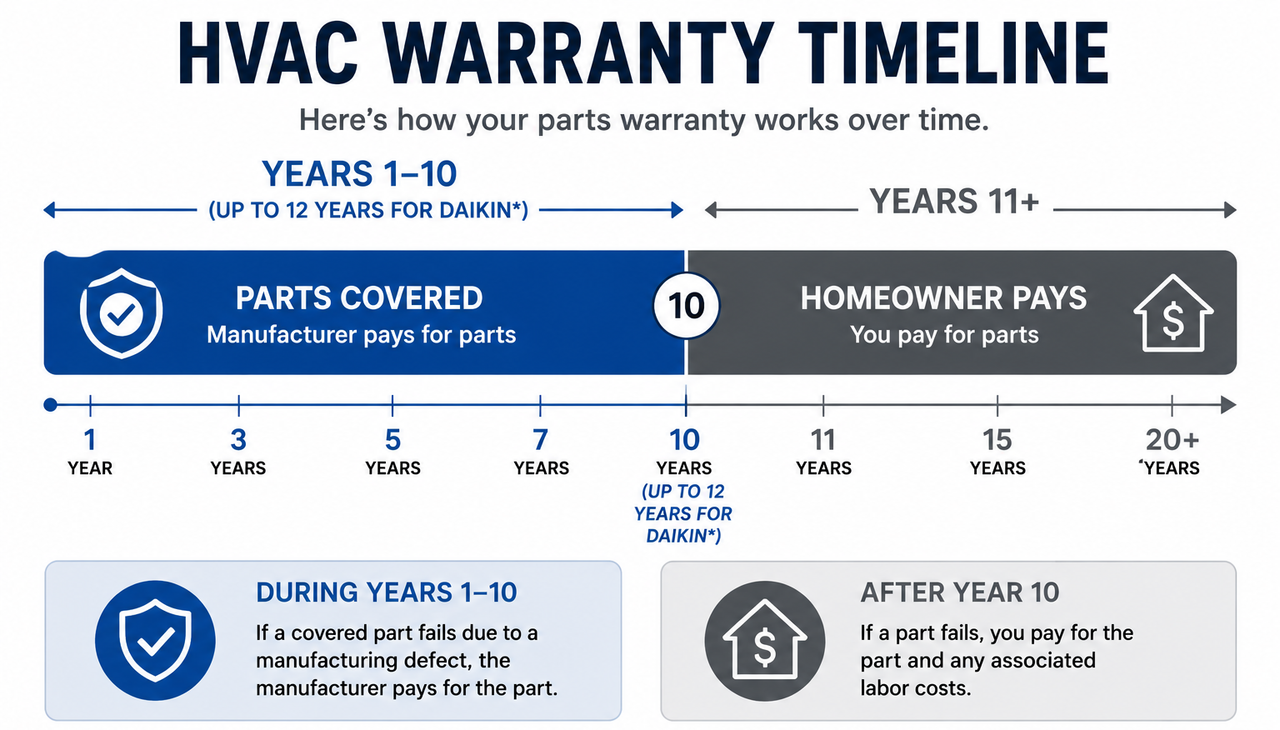
While the system is under its parts warranty, a failed control board or inverter is usually a covered part. During those years, you usually only pay for labor and the service call, not the full price of the part.
During the warranty, even an advanced variable-speed system can be fairly cheap to fix.
Once the warranty ends, things change.
The same advanced parts that give you better comfort can turn into pricey repairs. A variable-speed or inverter repair can cost a lot more than the same repair on a simpler single-stage system, because the parts are more advanced and cost more.
Everything in the industry is getting more advanced, which means repair costs are going up along with the technology.
That isn't always a reason to skip variable-speed. It's just part of owning one.
When you compare systems, look closely at:
- How long the maker's parts warranty lasts
- How long you plan to stay in the home
- Whether the comfort is worth the higher repair cost later
For some homeowners, the comfort of variable-speed is well worth it. For others, a simpler system fits their needs and their timeline better.
Which System Gives the Most Energy Savings?
If you're paying $700 or more every month on energy, a new HVAC system can cut your bills a lot. So which system saves you the most?
Start with the biggest factor, and it has nothing to do with staging: the age of the system you're replacing.
If you're pulling out a 15, 20, or 22-year-old system, you will use less energy with any new one, period. Any new system, at any stage, beats a 20-year-old unit that has lost power and runs on old efficiency rules. That's the biggest jump most homeowners ever see, and you get it whether you pick single-stage, two-stage, or variable-speed.
After that, the stage changes how much more you save.
A single-stage system gives you the efficiency on its rating, but it runs at full power and turns on and off, and every hard start uses extra energy.
A two-stage system spends most of its time on low, with fewer hard starts and longer, gentler runs. Over a long Houston summer, that steady running usually uses a bit less energy than a single-stage system.
A variable-speed system goes further. By running on low for long stretches and rarely jumping to full power, it skips most of the energy spikes that come with starting and stopping. That's also why these systems usually have the highest efficiency ratings in a brand's lineup. Over a Houston summer, it's usually the cheapest of the three to run.
So energy savings follow comfort: single-stage saves you real money over an old unit, two-stage usually saves a bit more, and variable-speed saves the most. How big the gap is depends on your home and the install, but the order holds.
One more thing: Your bill also depends on insulation, air leaks, ductwork, thermostat habits, right sizing and, of course, your energy rate. Those affect every system the same way, so it's worth addressing them along with the equipment.
How Much Does Each Type of Equipment Cost?
Most of the time, the price goes up in this order:
- Single-stage
- Two-stage
- Variable-speed
That's because as you move up, you get more advanced parts. A two-stage or inverter-driven compressor costs more than a single-speed one. A variable-speed system often needs a matching air handler and smart controls so the whole system works together. You're paying for a better-matched system, not just one upgraded part. That's what raises the price.
But the stage you pick is usually a small part of your total cost. The bigger changes come from the job itself: how big your home is, the shape your ductwork is in, any electrical work, the efficiency level you choose, and anything we need to fix so the new system runs right. Two homes can pick the same stage and still pay different amounts for those reasons. Our guide on what it costs to replace an HVAC system in Cypress and Katy walks through what really drives the price.
One more thing about the equipment. With some brands, a variable-speed system can cost about the same as a two-stage one, or even less, once you add in rebates and incentives. So it's worth comparing full quotes instead of assuming the order above always holds.
The harder question is whether moving up makes sense for you. That depends on your life. If you plan to move in a few years, you might choose differently than someone staying for fifteen.
If you've dealt with humidity for years, the comfort may matter more to you.
If you work from home, you may notice the quiet more than someone who's gone all day. And the price tag is only part of the story, because the energy savings and the repair costs we talked about above show up over all the years you own the system.
Which System Should You Choose?
There's no one winner, and the choice gets much easier once you name what you want to fix.
Single-Stage May Be Worth Considering If:
- Cost to buy is your main concern
- You're happy with how a normal system works
- You want simpler equipment
- You plan to move in the next few years
Two-Stage May Be Worth Considering If:
- You want better comfort without paying for the top system
- Humidity control matters to you
- You'd like quieter operation
- You want a balance of cost and comfort
Variable-Speed May Be Worth Considering If:
- Comfort is a top priority
- Humidity has been an ongoing problem
- You want the quietest system you can get
- You plan to stay in the home a long time
- You're willing to pay more upfront for the comfort, knowing repairs can cost more later
Notice what's not on these lists: brand names. The type usually gets decided by your goals first.
Bottom Line
The three systems differ in how much they can change their output. Single-stage runs at one level, two-stage at two, and variable-speed across a wide range.
The more a system can adjust, the steadier your comfort, the better it handles humidity, and the quieter it runs. It usually saves a little more energy too. In return, you pay more upfront, and once the warranty ends, repairs can cost more.
Heat pumps come in all three stages, so how you heat your home is a separate choice from the stage you pick.
If you've made it this far, you've probably seen that the "best" system isn't the one with the most technology. It's the one that fits your comfort, your budget, your home, and how long you plan to stay.
Schedule a Complimentary System Estimate
Not sure which system makes sense for your home? We're glad to answer your questions, talk through your comfort concerns, look at your current system, and walk you through the choices that actually fit. Schedule here.
Veteran-Owned. Family-Run. Dr. Mom Approved.
Frequently Asked Questions
Is a variable-speed HVAC system worth the extra cost?
It depends on how much you value comfort, humidity control, lower energy bills, and quiet, and on how long you plan to stay in the home.
Does a variable-speed system last longer?
Not always. How long it lasts depends more on install quality, maintenance, how hard it runs, and how well it was built than on the stage.
Is a two-stage HVAC system worth it in Houston?
For many homeowners, yes. Two-stage equipment often gives better humidity control and comfort without the cost of a top variable-speed system.
Do heat pumps come in single-stage, two-stage, and variable-speed models?
Yes. The heat pump choice and the stage choice are separate. A heat pump can be single-stage, two-stage, or variable-speed.
Which HVAC system removes humidity best?
Variable-speed systems usually control humidity best because they run longer on low.
Is a variable-speed HVAC system more expensive to repair?
Usually yes, especially after the warranty ends, because the system has more advanced parts.
Can a single-stage HVAC system still be comfortable?
Yes. A right-sized, well-installed single-stage system can be very comfortable, especially with good ductwork and humidity control.